Boxer: More Than Just a Fighter (or a Dog!)
What Does 'Boxer' Mean?
Boxer meaning isn't as simple as you might think. The word "boxer" actually refers to four completely different things:
- An athlete - Someone who fights with their fists in the sport of boxing
- A dog breed - A medium-sized German breed with a short coat and square jaw
- A historical figure - A member of a Chinese secret society that attempted to drive foreigners from China in 1900
- Underwear - Short for "boxer shorts," loose-fitting men's undergarments
Most dictionaries list at least two definitions for "boxer," but Merriam-Webster provides all four distinct meanings. The word comes from different origins depending on which meaning you're using - the athlete takes the name from the sport of boxing, the dog was named for its habit of "boxing" with its front paws, and the Chinese Boxers got their name from a translation of "I Ho Ch'üan" (Righteous and Harmonious Fists).
Why does this matter? If you're searching for information about boxing as fitness, understanding the full boxer meaning helps you appreciate what it means to "train like a boxer" - it's not just about throwing punches, but about adopting the strength, speed, and mental toughness that defines these athletes.
I'm Robby Welch, National Head Coach at Legends Boxing, and I've spent years helping people understand what it truly means to train like a boxer and transform their fitness journey. Throughout this guide, I'll break down each boxer meaning and show you how the athletic definition can change your approach to fitness.

Boxer meaning terminology:
The Boxer as an Athlete: The Sweet Science
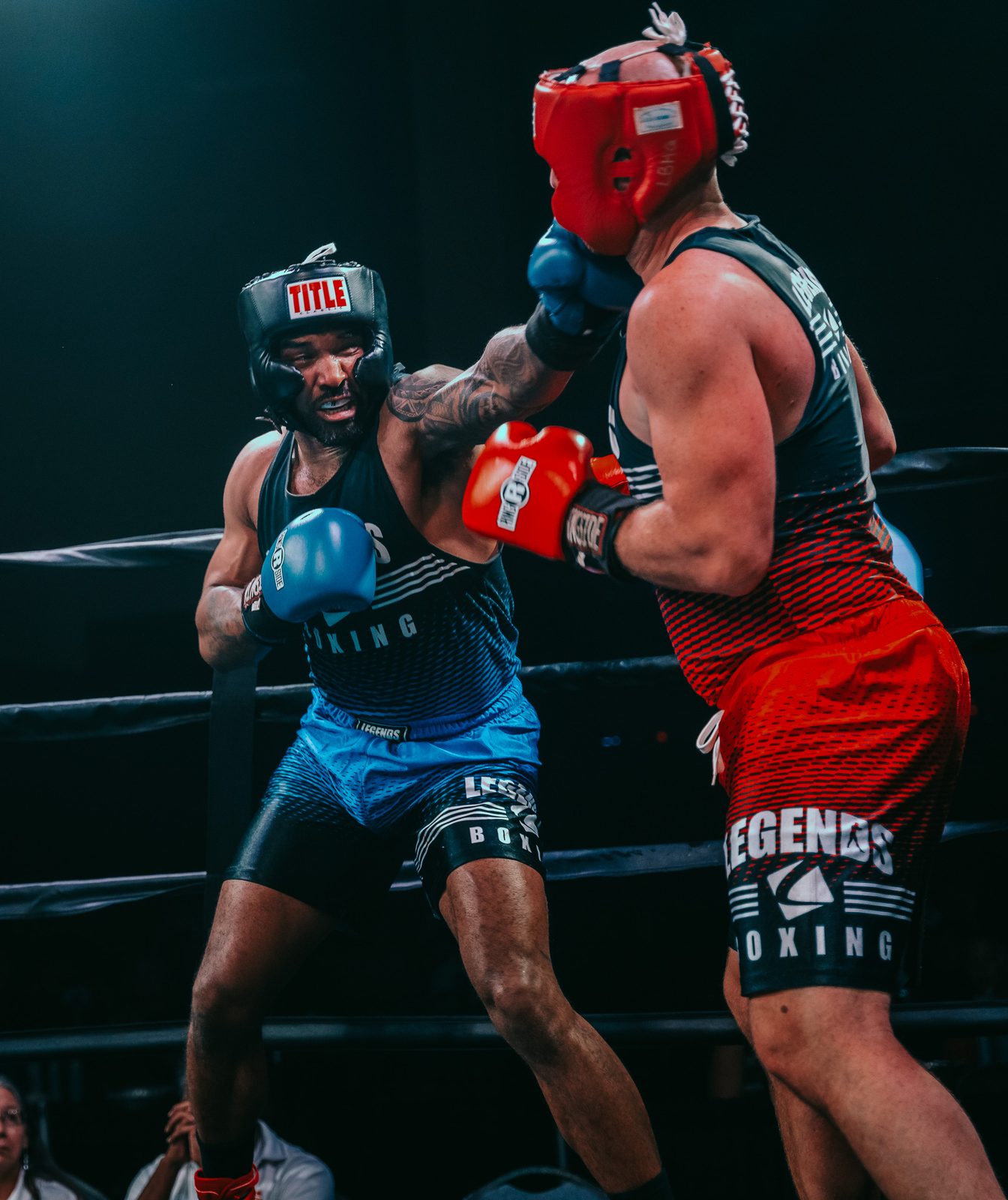
When most people hear the word "boxer," they picture an athlete stepping into the ring with confidence and power. This is perhaps the most inspiring boxer meaning – one that represents strength, discipline, and sharp strategic thinking. At Legends Boxing, this definition is what drives us. We take everything that makes boxing such an incredible sport and turn it into fitness that anyone can experience.

Boxing has been called "the sweet science" for good reason. It's been around for thousands of years, dating back to ancient Egypt and Greece. What makes it special is that it demands both physical power and mental sharpness. Boxers aren't just strong – they're strategic thinkers who need to read their opponent and react in split seconds. This combination makes boxers some of the fittest athletes on the planet.
The Sporting Boxer Meaning: What is a Pugilist?
A pugilist is just another word for a boxer – someone who practices the sport of boxing. You might also hear the term "prizefighter," which highlights the competitive side of the sport. Whether they're amateur or professional, these athletes master both offense and defense, using their fists (protected by boxing gloves) inside a boxing ring.
Being a pugilist isn't about throwing wild punches. It's about strategy, timing, and outlasting your opponent. As one observer described it: "There was one guy in front of my dad, jumping up and down like a boxer with his hands out like a boxer." That constant readiness and movement captures what being a boxer is all about. Another story shows the dedication required: "She never thought that being a professional boxer was a career option," yet countless athletes pursue it with incredible passion.
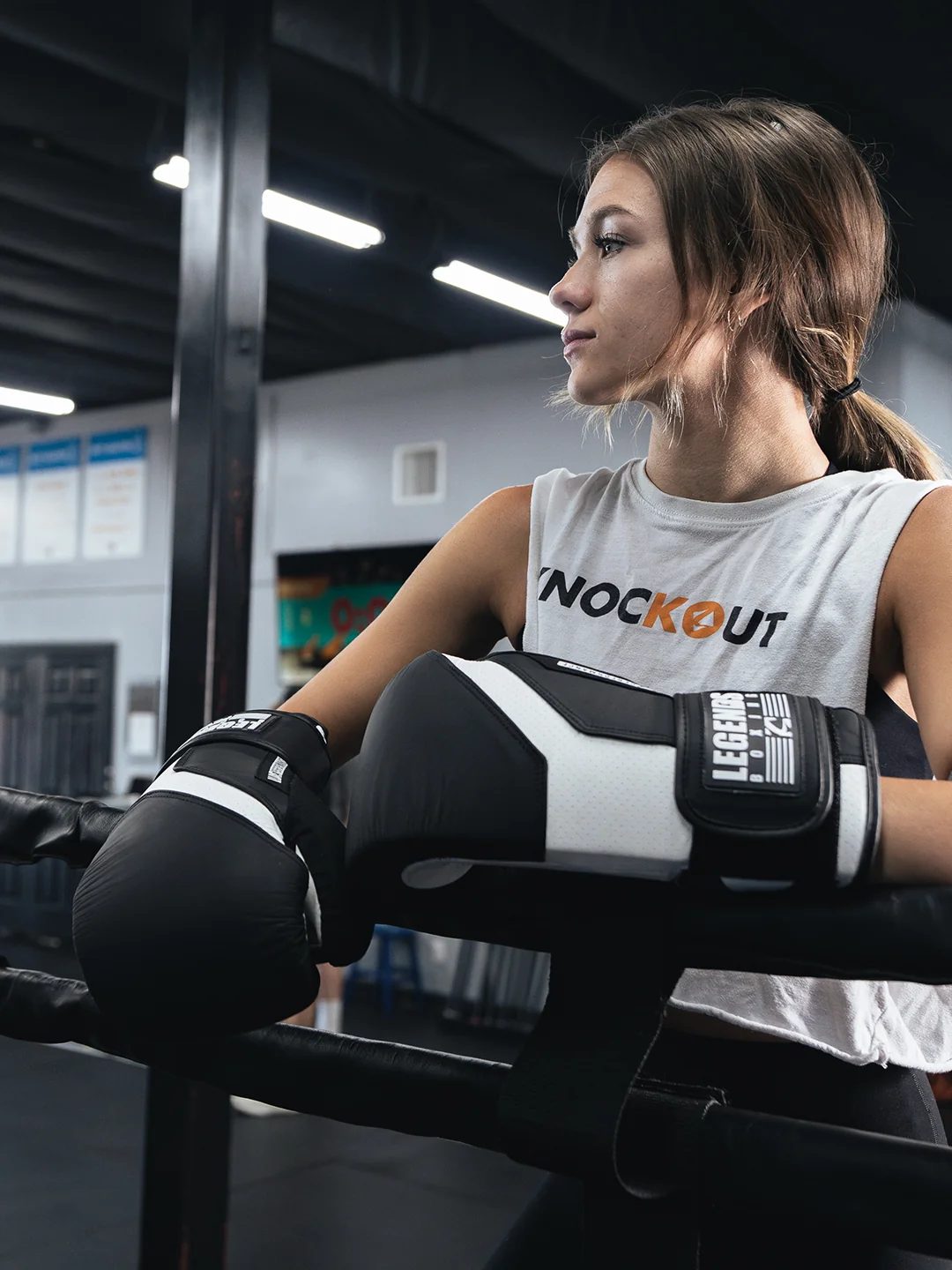
Here's what we believe at Legends Boxing: you don't need to compete professionally to accept your inner pugilist. Our classes bring you the core elements of boxing – the footwork, the conditioning, the mental focus – without any contact. You'll move like a boxer, punch like a boxer, and think like a boxer, all while getting an amazing workout in a supportive environment. Want to know more? Check out what to expect in a boxing class.
What are the different styles and types of boxers?
Just like any sport, boxing has different styles that play to each fighter's strengths. Understanding these styles helps you appreciate why boxing is called the "sweet science" – it's not just about hitting hard, it's about strategy.
Sluggers are all about power. They're looking for that knockout punch, often trading defense for offense. These fighters have devastating punching power, though they might sacrifice speed and agility to get it.
Swarmers (also called in-fighters) love getting close to their opponents. They throw a huge volume of punches from short range, pressuring their opponent relentlessly until they break them down.
Out-boxers (or out-fighters) prefer keeping their distance. They use quick jabs and smart footwork to score points while staying out of danger. These boxers are known for their agility and ring intelligence.
Boxer-punchers combine the best of both worlds. They have the technical skill and footwork of an out-boxer but can also deliver knockout power. ESPN once described an athlete as "a crowd-pleasing boxer-puncher who was a standout amateur with a 167-10 record."
Beyond fighting styles, boxers also compete in weight classes to ensure fair matches. Professional boxing has 17 different weight classes, from Super Flyweights at 105 pounds all the way up to Heavyweights at 200 pounds and above. You've probably heard of divisions like Flyweight (no more than 112 pounds for amateurs), Featherweight (123-126 pounds for pros), Lightweight (131-135 pounds for pros), Welterweight (141-147 pounds for pros), Middleweight (155-160 pounds for pros), and Heavyweight (over 190 pounds for pros).
These classifications keep the sport safe and competitive, making sure fighters face opponents of similar size and strength.
How do you train like a boxer?
Training like a boxer is one of the most effective ways to build a lean, strong, and athletic body. It's intense, it's challenging, and it combines cardio and strength training in a way that transforms your entire physique. There's a reason you've never seen an out-of-shape boxer.
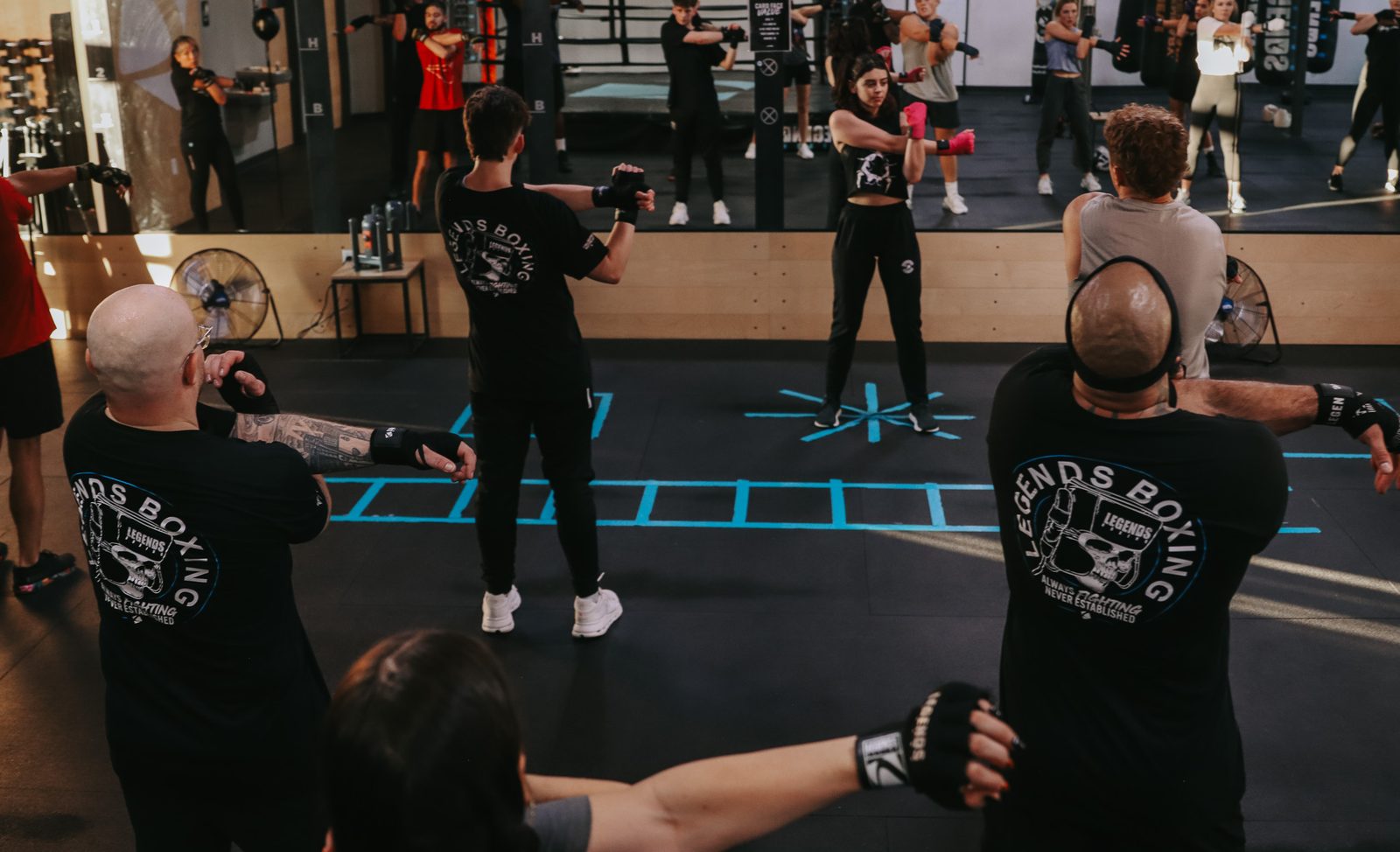
Cardio is the foundation of boxing training. Boxers need incredible stamina to last multiple rounds, so they run, jump rope, and do high-intensity interval training. At Legends Boxing, our classes keep you moving with non-stop energy and dynamic drills that push your cardiovascular fitness to new levels.
Strength training is where boxers build their power. While punches come from the arms, the real force comes from your core, legs, and back. Boxers do exercises like squats, deadlifts, plyometrics, and core work to develop explosive strength. Our workouts engage your whole body, building functional strength that makes every movement more powerful.
Footwork drills are critical for speed and agility. Boxers spend hours on ladder drills, shadowboxing, and movement patterns to improve their balance and ability to move quickly in any direction. We weave dynamic footwork into every class to sharpen your coordination and agility.
Bag work is where technique meets intensity. Hitting the heavy bag, speed bag, and double-end bag builds punching power, speed, and accuracy. It's also an incredible calorie burner – boxers can burn up to 1,000 calories per hour! In our classes, you'll spend plenty of time on the bags, perfecting your jab, hook, and cross.
Sparring in traditional boxing means practicing against an opponent. While our Legends Boxing classes are non-contact and focused purely on fitness, we bring that same intensity through varied combinations and movements. You'll develop mental toughness and quick decision-making without any contact.
Training like a boxer isn't just about physical change. It's also about mental conditioning. Boxing requires intense focus, discipline, and the ability to think several moves ahead. It's "strength conditioning for the brain." This mental toughness, combined with better hand-eye coordination and serious stress relief, makes boxing-based fitness a complete mind-body workout.
Ready to experience what training like a boxer feels like? We'd love to have you find a boxing gym near you. Our locations across Utah, Florida, and Texas are waiting to welcome you!
The Boxer as a Dog Breed: Man's Best Friend
If you've ever met a Boxer dog, you know they're impossible to forget. Beyond the athletic ring, the boxer meaning takes on a completely different form – one with four legs, a wagging tail, and an irresistible personality. This medium-sized German breed has captured hearts around the world, and it's easy to see why.

The Canine Boxer Meaning: A Loyal Companion
The Boxer dog has a fascinating history that begins in late 19th century Germany. Breeders developed these magnificent dogs from the Bullenbeisser (which translates to "bull-biter") and the Old English Bulldog. Originally, they were bred for hunting large game like wild boar and deer, using their powerful jaws and fearless nature to hold prey until hunters arrived.
As times changed, so did the Boxer's role. Their intelligence and strength made them perfect candidates for police and military work. But today? They've found their true calling as beloved family companions.
What makes a Boxer instantly recognizable? Their physical characteristics are distinctive and striking. They have strong, sturdy bodies covered in a short, smooth coat that comes in shades of fawn or brindle. Their most notable feature is their square jaw and short muzzle, giving them that characteristic "pushed-in" face. Boxers belong to the working dog group, reflecting their heritage as capable, protective animals.
But here's what really sets Boxers apart – their personality. These dogs have incredibly expressive faces that many describe as "clownish." One minute they're dignified watchdogs, the next they're goofing around like comedians. They're naturally good-natured, patient with children, and deeply loyal to their families. That said, they're not couch potatoes. Boxers need consistent training and plenty of exercise to channel their abundant energy.
One of the most endearing qualities of Boxers is their eternal youth. These dogs act like puppies well into adulthood, maintaining their playful spirit for years. They thrive on human companionship and form incredibly strong bonds with their families, often following their favorite people from room to room.
Why are they called Boxer dogs?
Ever wondered why a dog breed shares its name with a combat sport athlete? The answer is actually quite charming and directly connects to the boxer meaning we explored earlier.
The name comes from the breed's distinctive play behavior. When Boxers get excited or playful, they stand up on their hind legs and "box" with their front paws, swatting and pawing at their playmates much like a human boxer throwing punches. This adorable habit, combined with their somewhat pugnacious (ready-to-rumble) appearance, inspired German breeders to name them "Boxers."
There's an alternative theory that the name derived from Boxl, a German term for slaughterhouse where these dogs were commonly found. But let's be honest – the "boxing with paws" explanation is much more delightful and widely accepted. It perfectly captures their spirited, interactive nature and gives us yet another dimension to the rich boxer meaning.
Whether you're training like a human boxer at Legends Boxing or playing with a four-legged Boxer at home, both embody energy, strength, and an undeniable zest for life.
Unpacking the Historical Boxer Meaning: The Boxer Rebellion
Now we're stepping away from the gym and the dog park to explore a fascinating chapter of world history. The boxer meaning here refers to something completely different—a powerful nationalist movement that shook China at the dawn of the 20th century.

Who were the Boxers in Chinese history?
The Boxers were members of a Chinese secret society called the Society of Righteous and Harmonious Fists, or I Ho Ch'üan in Chinese. They emerged during the late 1800s, when China was struggling under heavy foreign influence and internal turmoil. These were mostly peasants and farmers who felt their traditional way of life slipping away.
Here's where the name gets interesting: Western observers watched these society members practicing their martial arts exercises, which looked a lot like shadowboxing. The Chinese name "I Ho Ch'üan" literally translates to "Righteous and Harmonious Fists," so foreigners simply called them "Boxers." It was their closest reference point for what they were seeing.
The Boxers practiced martial arts and held deep spiritual beliefs. They actually thought their rituals and training gave them supernatural powers—including the ability to resist foreign bullets. During the Qing dynasty, they gained massive support from people who resented how Western powers and Christian missionaries were changing China.
What was the goal of the Boxer Rebellion?
In 1900, these tensions exploded into what we now call the Boxer Rebellion. The Boxers had three main goals: expel all foreigners from China, resist Western influence in every form, and end Christian missionary work throughout the country.
They weren't subtle about it. The Boxers attacked foreign diplomats, merchants, and soldiers. They destroyed railways and telegraphs, seeing them as symbols of foreign corruption. They targeted Chinese Christians, forcing them to give up their new faith. Foreign churches became targets. The violence escalated until the Boxers laid siege to the foreign legations in Beijing itself.
This prompted an international response. Eight nations—Great Britain, France, Germany, Japan, Russia, the United States, Italy, and Austria-Hungary—formed the Eight-Nation Alliance and sent troops to suppress the uprising. The rebellion ultimately failed, leading to the Boxer Protocol, which forced China to pay heavy reparations and grant even more power to foreign nations.
Despite its failure, the Boxer Rebellion was a watershed moment. It showed the world that Chinese nationalism was a force to be reckoned with and contributed to the eventual collapse of the Qing dynasty just a decade later. You can dive deeper into this pivotal event through this Encyclopedia article about the Boxer Rebellion.
It's fascinating how the boxer meaning can span from athletic training to historical revolution—all connected by the image of fists and fighting spirit.
Other Common Meanings and Uses of 'Boxer'
The boxer meaning doesn't stop with athletes, dogs, and historical figures. This versatile word has worked its way into our everyday vocabulary in some surprising ways, especially when it comes to what we wear and how we describe things.
You'll hear the word pronounced as /ˈbɒksə/ in British English or /ˈbɑːksər/ (ˈbäk-sər) in American English. When you're talking about more than one, the plural form is simply "boxers" – which brings us to one of the most common uses of the word you'll encounter in daily life.
What are boxer shorts?
Walk into any clothing store, and you'll find "boxer shorts" in the men's underwear section. These loose-fitting shorts get their name directly from the athletic shorts worn by boxing athletes in the ring. Just like those athletic shorts, they're designed to allow full freedom of movement.
Most people just call them "boxers" for short. You might hear someone say, "The ends of his frayed boxer shorts were visible below," or more casually, "He raced out in just his boxers and punched the robber." The connection to the sport is obvious – both types of shorts prioritize comfort and unrestricted movement, whether you're throwing punches or just going about your day.
The origin of the name makes perfect sense when you think about it. Boxers (the athletes) needed shorts that wouldn't restrict their leg movement or flexibility during a match. That same practical design translated perfectly into everyday underwear, and the name stuck.
How is 'boxer' used in phrases?
Beyond clothing, "boxer" pops up in several interesting compound words and phrases that have nothing to do with fighting or fitness.
Take the boxer engine, for example. This is a type of internal combustion engine where the cylinders are positioned horizontally, opposing each other. Subaru has built its reputation on these engines, using them in many of their vehicles. The name comes from the way the pistons move back and forth, resembling boxers throwing punches at each other from opposite sides.
We've already talked about the boxer-puncher fighting style – that perfect blend of technical skill and knockout power that makes for exciting matches. But the word also extends into figurative territory. You might hear someone described as "a political boxer," meaning they're aggressive, strategic, and tenacious in political debates. They fight hard for their positions, even though they're not literally in a boxing ring.
These varied uses show how a single word can carry multiple distinct meanings, each with its own rich context and history. Whether you're talking about underwear, car engines, or someone's fighting spirit, the boxer meaning you're using depends entirely on the conversation you're having.
Conclusion: Accept Your Inner Boxer
We've taken quite a journey through "boxer" – from the dedicated athletes who step into the ring, to the loyal German dog breed that boxes with its paws, to the Chinese nationalists who fought against foreign influence, and even to the comfortable shorts you might be wearing right now. It's fascinating how one word can carry so many completely different meanings.
But here's what really matters to us at Legends Boxing: the athletic boxer meaning holds something powerful for everyone. We genuinely believe that inside each person, there's an "inner boxer" waiting to be releaseed – a source of strength, resilience, and mental toughness you might not even know you have.
The beautiful truth is that you don't need to dream of becoming a professional prizefighter or compete in a ring to experience what it means to train like a boxer. You don't need any previous experience at all. What you do need is simply a willingness to try something different, to challenge yourself, and to find what your body and mind can really do.
Our boxing-based fitness classes bring together the best elements of what makes boxers such incredible athletes – the dynamic movements, the strategic thinking, the full-body conditioning – and package it into workouts that are accessible, effective, and honestly, a lot of fun. You'll build strength you didn't know you had. Your cardiovascular fitness will soar. Your mental sharpness will improve. And perhaps most importantly, you'll find a powerful outlet for stress that actually leaves you feeling energized rather than drained.
This is fitness that feels different because it taps into something primal and empowering. There's a reason boxing has captivated people for thousands of years – it's the ultimate test and expression of human capability, combining physical prowess with mental agility in a way few other activities can match.
We're not just another gym offering another workout. At Legends Boxing, we're creating a community of people who are finding their own version of what boxer meaning can be in their lives – strength, confidence, discipline, and change.
Your inner boxer is ready. The question is: are you?
Book a free workout with us today and start your journey toward becoming the strongest, healthiest, most confident version of yourself. No experience required – just bring yourself and an open mind. We'll handle the rest.