
Step Into the Ring With Confidence: Beginner Boxing Skills Guide
Boxing skills for beginners are the foundation of a complete workout — combining cardio, strength, and mental discipline. This guide covers proper stance, essential footwork, the four fundamental punches, defensive techniques, beginner gear, and common mistakes to avoid so you can walk into your first class with confidence.
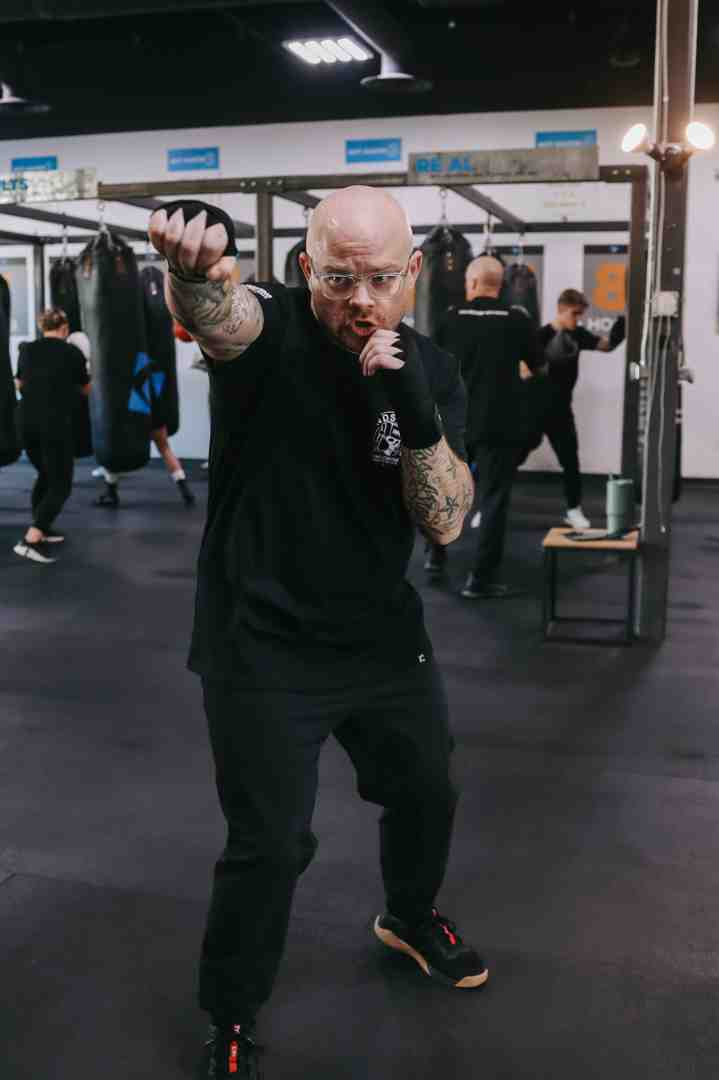
Why Boxing Skills for Beginners Are Your Gateway to Total Fitness
Boxing skills for beginners are the foundation of a complete workout, combining cardio, strength, and mental discipline. Boxing relieves stress, builds confidence, and breaks up boring gym routines — with benefits that extend far beyond the ring.
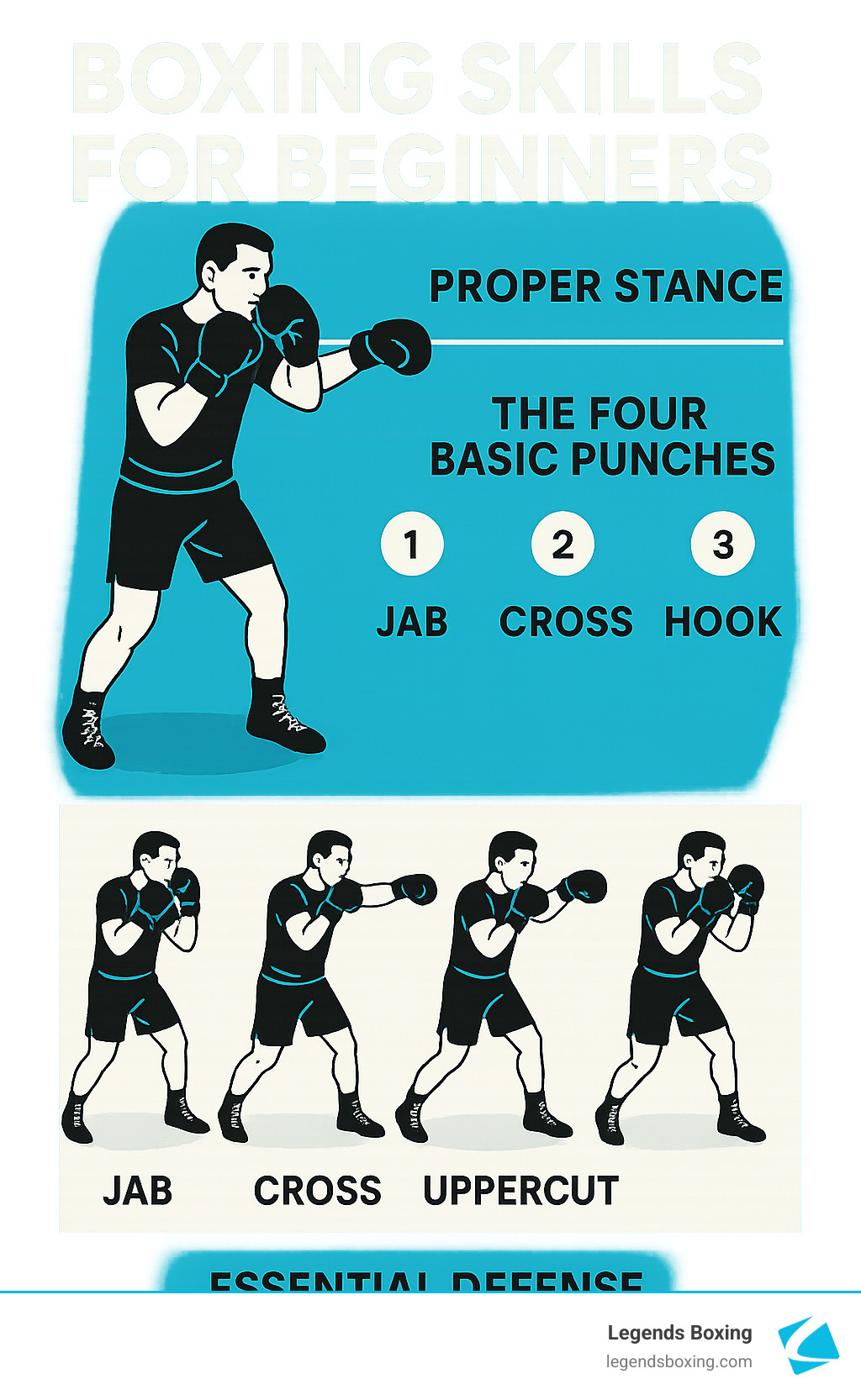
Here are the essential boxing skills every beginner should master:
- Proper Boxing Stance — orthodox or southpaw positioning with feet shoulder-width apart
- Basic Footwork — step-drag movement, pivoting, and lateral movement
- The Four Fundamental Punches — Jab (1), Cross (2), Hook (3), and Uppercut (4)
- Essential Defense — guard position, blocking, and basic head movement
- Breathing Technique — exhaling with punches and maintaining rhythm
Boxing is adaptable for all fitness levels. Research shows conditioning should be about 50% of your early workouts. You'll build fitness while learning technique — at the same time.
Many trainers say boxing is 90% mental. It develops focus, discipline, and confidence that carries over into daily life. You'll learn to stay calm under pressure while getting an incredible full-body workout.
I'm Robby Welch, National Head Coach at Legends Boxing. With over two years of experience, I've helped thousands of beginners master fundamental boxing skills through accessible, enjoyable training programs used nationwide.
Why Step Into the Ring? The Unbeatable Benefits of Boxing
Boxing offers a holistic transformation — building a stronger, more resilient you, physically and mentally.
Physical Benefits
| Benefit | What Happens |
|---|---|
| Cardiovascular Health | Constant movement boosts endurance and stamina; roadwork (running 2–3x/week) amplifies this |
| Strength Building | Every punch and defensive move engages core, shoulders, arms, and legs — functional strength throughout |
| Weight Loss | Burns 500–700 calories in 30 minutes; a 155-lb person burns roughly 500 cal per half-hour of boxing training (Harvard Health) |
| Coordination & Agility | The combination of footwork, head movement, and punches sharpens hand-eye coordination dramatically |
Mental Benefits
- Stress Relief — hitting a heavy bag is a fantastic way to release frustration and leave refreshed
- Increased Confidence — mastering new skills and seeing physical improvements builds self-confidence in and out of the gym
- Discipline and Focus — boxing demands concentration on technique and strategy; the ability to stay calm under pressure is everything
- Self-Defense Skills — the fundamentals you learn are rooted in practical self-defense; you'll gain real knowledge on how to move and protect yourself
Building Your Foundation: Core Boxing Skills for Beginners
Learning boxing is like building a house — a solid foundation is essential. Before you can "float like a butterfly, sting like a bee," you must master the basics.
Your stance and footwork are the bedrock of everything. They control your balance, mobility, power, and defense. Without them, your punches will be weak and your guard will have holes.
The Boxer's Stance: Your Platform for Power and Defense
Your stance is your home base in boxing — providing balance and a platform for both offense and defense.
First, determine if you're orthodox (left foot forward, right-handed) or southpaw (right foot forward, left-handed). It may feel awkward at first — that's completely normal.
How to build your stance:
- Place feet shoulder-width apart; your dominant hand goes in the back for power
- Angle your feet about 45 degrees toward your target, lead toe aligned with rear heel
- Keep knees slightly bent — this lets you move quickly and generate power
- Weight evenly distributed on the balls of your feet; stay light and mobile
- Tuck your chin to protect your jaw
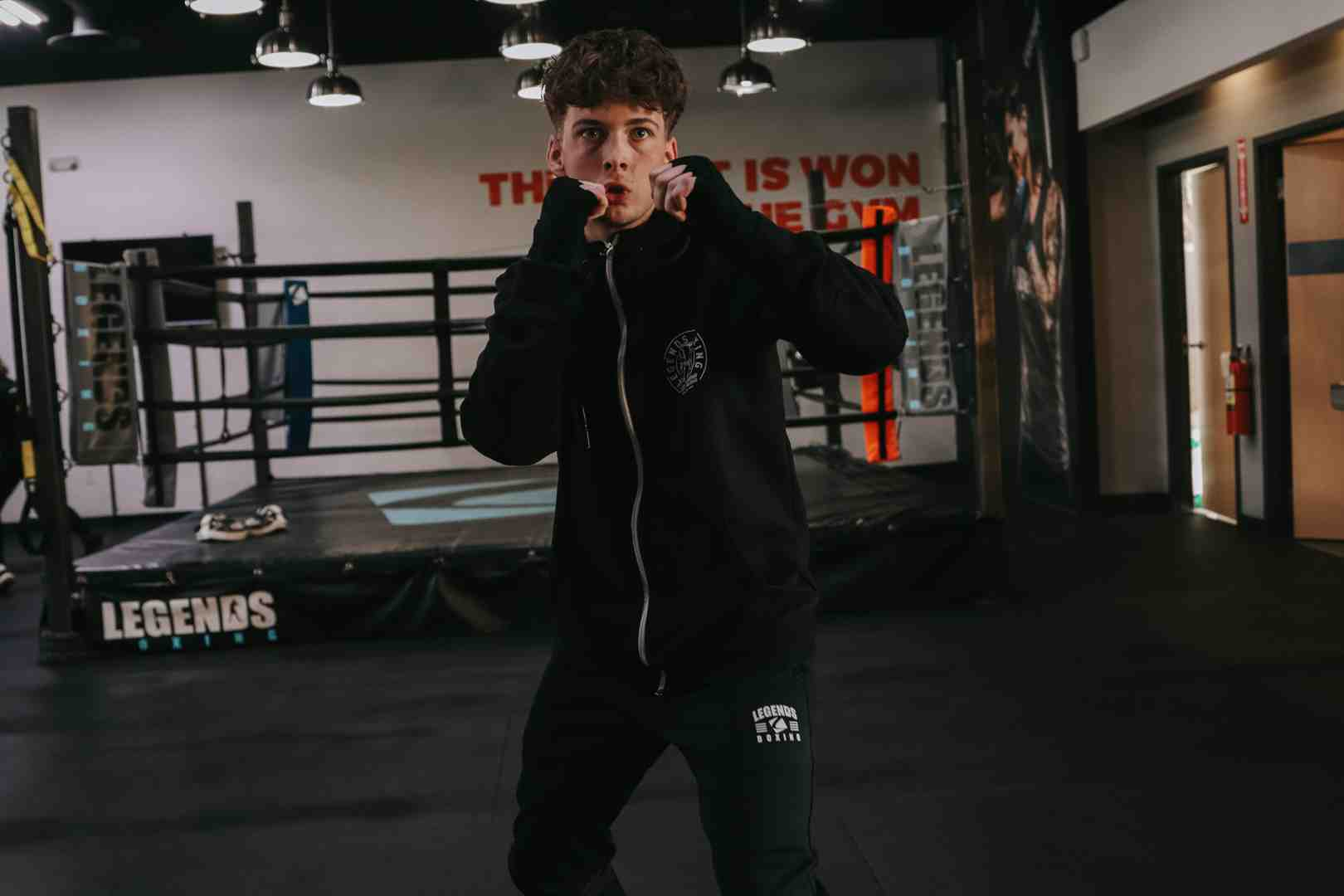
- Hands up: lead hand at shoulder height, rear hand by your chin, elbows tucked to protect your ribs
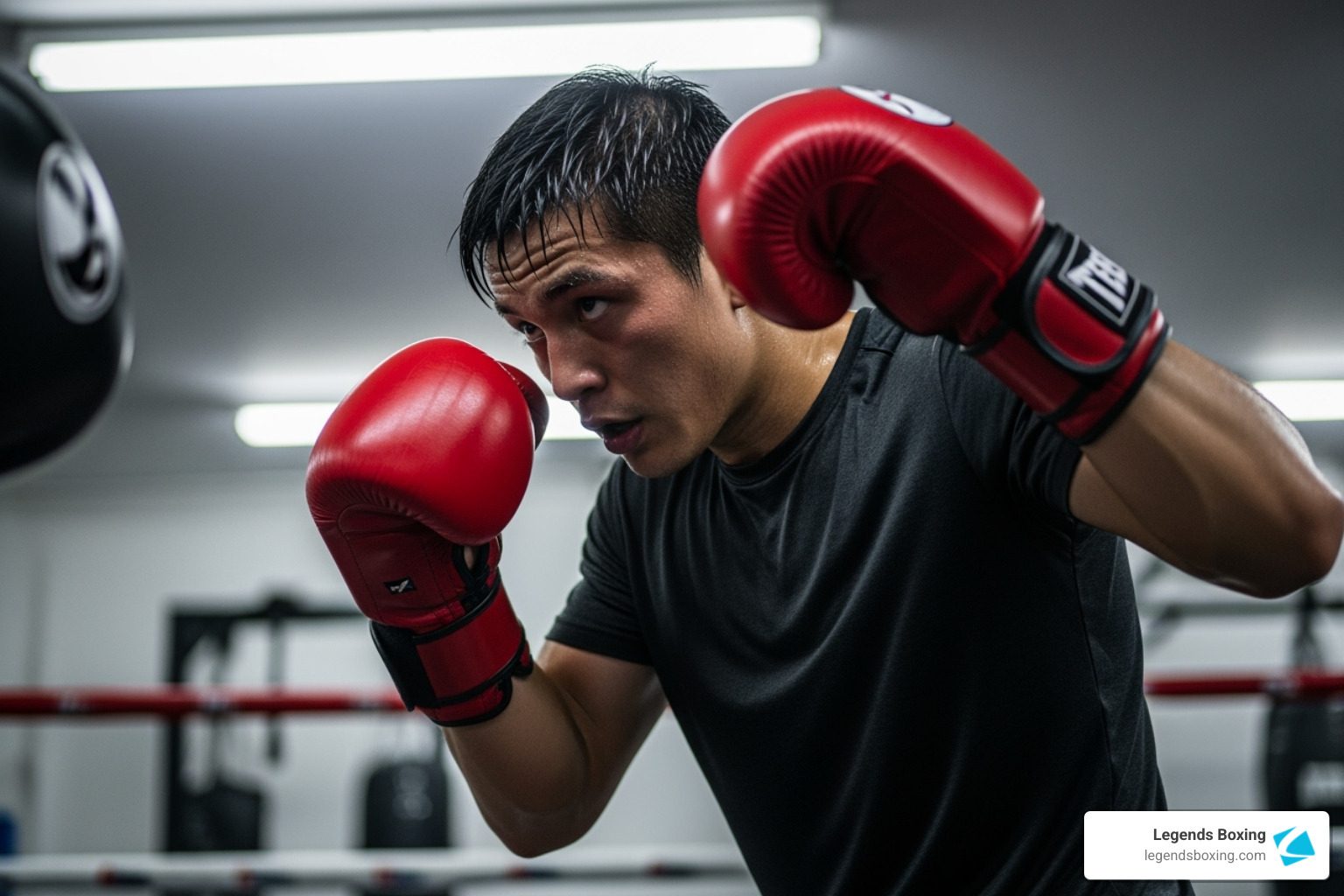
Float Like a Butterfly: Essential Footwork Drills
Footwork is the most important skill in boxing — it controls distance, angles, power, and safety.
The step-drag is the foundation. To move forward, step with your lead foot first, then drag the rear foot to follow. Always maintain your stance width — never let your feet cross.
Pivoting on the ball of your lead foot creates angles and helps you escape trouble. Practice pivots of 45–90 degrees.
Lateral movement makes you a harder target. Practice moving side-to-side while maintaining your stance to control distance and stay away from the ropes.
Basic footwork drills to build:
- Shadow stepping around the gym floor
- Ladder drills for precision and agility
- Cone drills for changing direction under control
- Jump rope to build rhythm, stamina, and light feet
Well-honed footwork can help you defend without even using your guard — making you incredibly hard to hit.
Mastering the Offense: The 4 Basic Punches
With stance and footwork down, it's time to throw punches. True power isn't brute force — it comes from your entire body working together.
Three universal rules before you start:
- Power comes from your hips and core, not just your arms. Beginners almost always punch only with their shoulders — that's the first habit to break.
- Exhale sharply with each punch. That "tss" sound you hear from boxers is intentional. It generates power and prevents you from gassing out.
- Always snap your hands back to your guard immediately. Speed is 50% throwing the punch and 50% returning to defend.
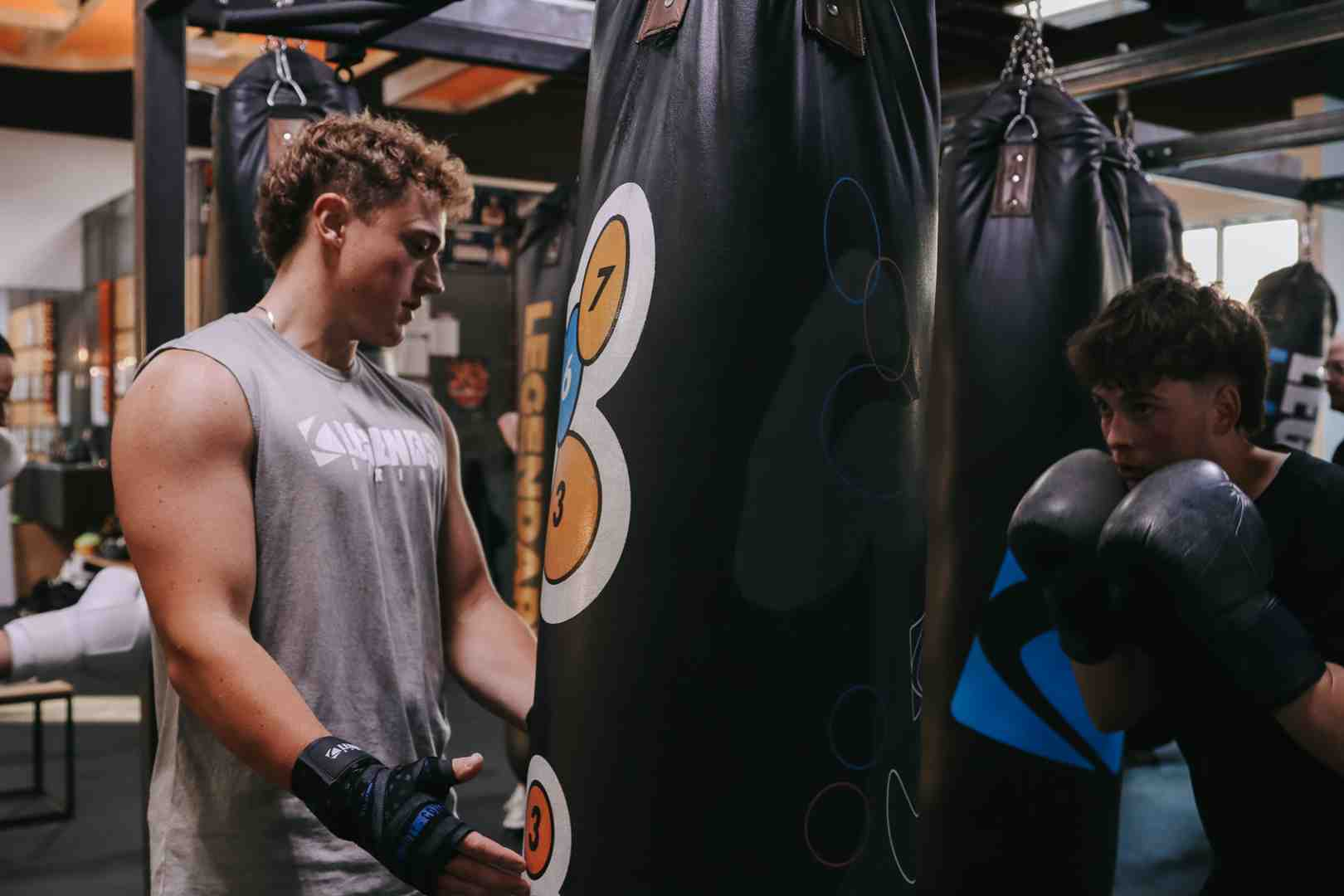
The Jab (1): Your Busiest Punch
The jab — thrown with your lead hand — is your most versatile tool. Use it to set up combinations, measure distance, and disrupt an opponent's rhythm.
Technique: Extend your lead arm straight out, rotating your fist so the palm faces down on contact. Your shoulder rises to protect your chin. Snap it back to your guard immediately. That rotation is what gives the jab its snap and power.
The Cross (2): Your Power Punch
The cross is your power punch, thrown with your rear hand — and it relies heavily on hip rotation.
Technique: Push off your rear foot, rotating hips and shoulders as you extend your rear arm. Pivot your rear heel to transfer body weight into the punch. Rotate your fist palm-down on impact and snap it back immediately.
The Hook (3): The Side-Angle Shot
The hook is a powerful, curved punch thrown with either hand in a horizontal motion. It's often the punch that changes a fight.
Technique: Power comes from your core and hips. Keep your elbow bent at 90 degrees. Pivot on your lead foot as you throw to generate rotational power. Always keep your non-punching hand guarding your chin.
The Uppercut (4): The Up-Close Devastator
The uppercut is a devastating close-range punch. Used less often than the others, which makes it very effective when it lands.
Technique: Drop your shoulder slightly and drive your fist upward in a compact motion. Power comes from pivoting at your waist and transferring weight upward. Avoid leaning forward or dropping your hands — it should be a short, controlled punch to the chin or body.
"Hit and Don't Get Hit": Essential Defensive Skills
Defense is just as crucial as offense. The art of boxing is to hit and not get hit. Good defense prevents injury and creates counter-punching opportunities. Always keep your eyes on your opponent.
Defense can be active (moving your body to avoid punches) or passive (using your guard to block). Both are essential.
Your Guard: The First Line of Defense
Your guard is your primary shield — armor protecting your most vulnerable areas.
Blocking means using your forearms and gloves as shields. Keep hands up and elbows tucked in. Your non-punching hand should always be guarding while the other punches.
Parrying is deflecting a punch with a slight hand movement. This redirects the punch away and creates openings for a counterattack. Keep elbows tucked to create a tight defensive shell so you can still see incoming punches through your guard.
Head Movement: Making Them Miss
Once your guard is solid, add head movement to make opponents miss entirely.
Slipping is a small head movement to the side to make a punch miss. It keeps you in perfect position to counter immediately.
Bobbing and weaving are larger movements. Bobbing is ducking under punches by bending at the knees; weaving is a U-shaped motion to avoid combinations. Both require good leg strength.
The secret to effective head movement is using your legs, not just your neck. Push off the opposite foot for power and balance when you slip.
The best defense combines a solid guard with smart head movement — multiple layers of protection working together.
Gearing Up and Getting Started
You don't need to break the bank to start boxing. A few key pieces of gear are essential for safety and effective training.

Essential Gear for Beginners
| Item | What to Know |
|---|---|
| Boxing gloves | Your most important investment — use 14oz or 16oz for training to provide cushioning and build strength |
| Hand wraps | Non-negotiable. They protect the small bones in your hands and support your wrists. Always wrap before gloves. |
| Workout clothes | Breathable athletic clothes that allow a full range of motion |
| Jump rope | Old-school but elite for conditioning, footwork rhythm, and stamina — portable and affordable |
Additional Gear for Sparring
| Item | When You Need It |
|---|---|
| Mouthguard | Non-negotiable for sparring — protects teeth and jaw |
| Headgear | Protects your head and face from cuts and impact |
| 16oz gloves | Required for sparring — extra padding protects both you and your partner |
| Groin protector | Optional but highly recommended for male boxers |
Putting It All Together: Your First Training Sessions
Consistency is your secret weapon. Train 2–3 times per week to build skills and conditioning while allowing proper recovery between sessions.
Expect conditioning to be about 50% of your early workouts — running, jumping rope, and bodyweight exercises. This balance naturally shifts as your fitness improves and technique sharpens.
Practice at home too. Shadowboxing in front of a mirror is one of the best ways to build muscle memory. Practice your stance, footwork, punches, and defense. If you have a heavy bag, limit early sessions to 1–2 times per week for no more than three rounds while your body adapts.
Common Beginner Mistakes and How to Fix Them
| Mistake | The Fix |
|---|---|
| Dropping your hands after punches | Snap hands back to guard immediately — your non-punching hand never leaves your face |
| Telegraphing punches | Avoid winding up or dipping before throwing; punches come straight from your guard |
| Being flat-footed | Stay on the balls of your feet; jump rope daily to build light, mobile feet |
| Holding your breath | Exhale sharply with every punch; staying relaxed conserves energy dramatically |
| Over-committing to power | Focus on technique and balance over raw power; use full-body rotation and snap punches back quickly |
When to Start Sparring
Sparring is applying your skills against a live opponent. For beginners, it's a learning experience — not a fight. We recommend waiting at least a year under a coach's supervision before any serious sparring.
Start with light, technical sparring: focus on specific movements, not full-power exchanges. Always wear full protective gear (mouthguard, headgear, 16oz gloves). Talk to your coach and partner about your goals — communication is essential, and your coach will tell you when you're ready.
Frequently Asked Questions
How long does it take to learn basic boxing skills?
You can learn the fundamentals of stance, punches, and footwork within a few weeks of consistent practice. Making those skills feel natural takes longer — think of it like learning to drive. Most people feel comfortable with the fundamentals after 1–3 months of training 2–3 times per week. Mastery is a lifelong journey — even pros constantly refine their technique. Focus on form over speed.
Can I learn boxing by myself at home?
You can start at home. Shadowboxing, stance practice, and basic punch mechanics are great beginners. However, to truly refine technique, correct mistakes, and learn defense properly, you need feedback from a qualified coach. Learning alone is like learning to dance by yourself — you miss the interactive elements. Home practice is a great supplement to gym training, but the gym is where real progress happens.
Is boxing a good workout for weight loss?
Absolutely. Boxing is one of the most effective workouts for weight loss — a high-intensity, full-body combination of cardio and strength training that can burn up to 700 calories per hour. Because boxing is dynamic and engaging, it keeps your mind occupied while your body works hard. The mix of cardio and strength improves body composition by building lean muscle, which boosts your metabolism long after the session ends.
Start Your Boxing Journey Today
Your journey into boxing skills for beginners is just beginning. You now have the building blocks to move, punch, and defend with confidence:
- A solid stance for power and protection
- Footwork as your engine for movement
- The four fundamental punches as your offensive tools
- Defensive skills to keep you safe
Boxing is more than just punches — it's a mental game that builds discipline, confidence, and resilience that will benefit every part of your life. Every champion started exactly where you are right now. Every practice session moves you forward.
The beauty of boxing for beginners is that it meets you where you are. Whether you want to get in shape, relieve stress, or try something completely new, boxing delivers.
Book a free workout today and experience the incredible physical and mental benefits firsthand. Or find a Legends Boxing location near you — your corner is waiting.