
From Zero to Boxer – Beginner-Friendly Heavy Bag Drills
A beginners boxing bag workout is a powerful way to build fitness while learning a practical skill — burning 300–500 calories per 30-minute session while engaging your arms, shoulders, back, core, and legs. This guide covers proper gear, stance, the four basic punches, a structured 5-round 20-minute beginner circuit, a week-by-week progression schedule, and a recovery blueprint.
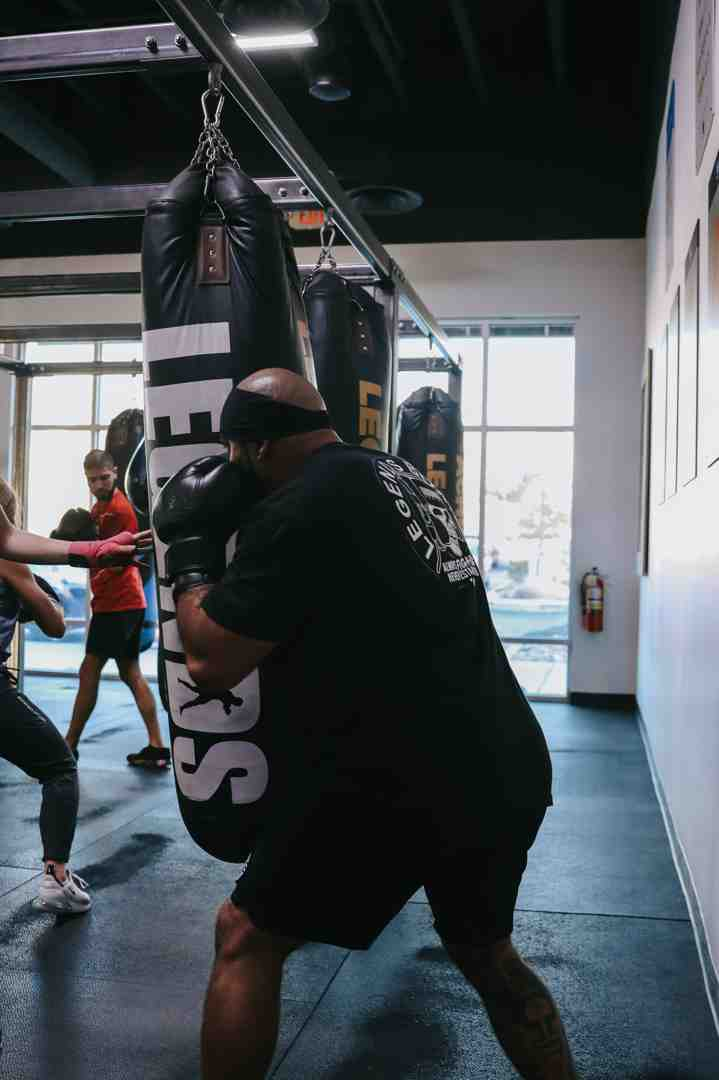
Getting Started with Heavy Bag Training
A beginners boxing bag workout offers a powerful way to build fitness while learning a practical skill. Whether you're looking to relieve stress, burn calories, or try something new, here's what you need to know:
Quick Start Guide:
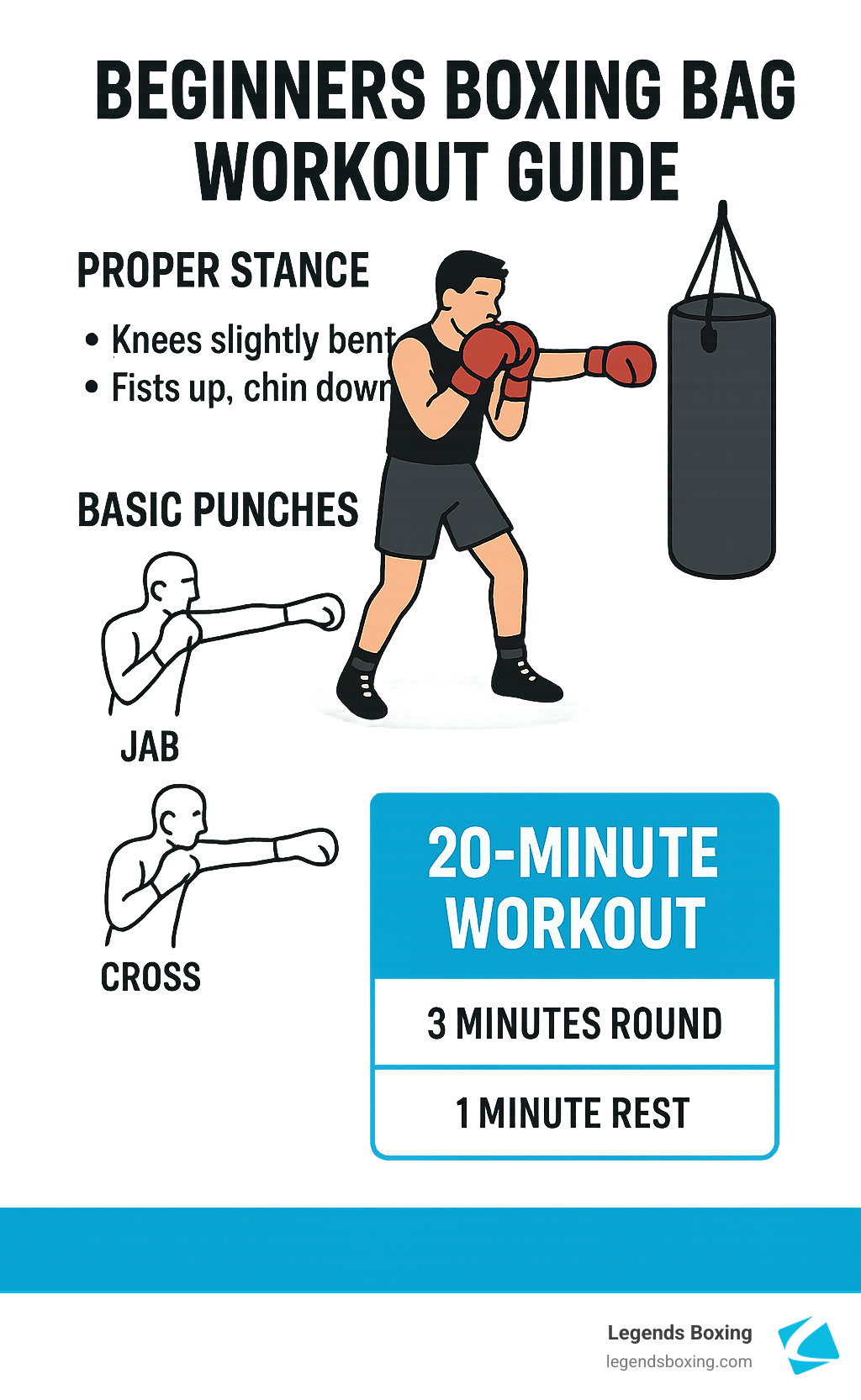
- Warm up for 5–10 minutes (jumping jacks, shadowboxing)
- Start with basic punches (jab, cross) at 50–75% power
- Structure your workout in 3-minute rounds with 1-minute rest
- Begin with 15–30 minute sessions 2–3 times per week
- Always wear hand wraps and gloves to protect your hands
The heavy bag isn't just for professional fighters. It's an accessible, full-body workout that combines cardio and strength training in one efficient package. A 30-minute session can burn between 300–500 calories while engaging your arms, shoulders, back, core, and even your legs.
What makes a beginners boxing bag workout particularly effective is how it combines physical challenges with mental focus. As you learn to throw proper punches and move around the bag, you'll develop coordination, timing, and a satisfying outlet for daily stress.
I'm Robby Welch, National Head Coach for Legends Boxing, with experience creating beginners boxing bag workout programs that have helped thousands of newcomers find their inner fighter. I've personally designed the drills in this guide to ensure you build proper technique while getting an incredible workout.
Why a Beginners Boxing Bag Workout Is a Game-Changer
Let's be honest — treadmills get boring and weight routines can feel like a chore. That's where a beginners boxing bag workout comes in and completely changes the game. There's something incredibly satisfying about landing a solid punch on a heavy bag that just can't be matched by traditional workouts.
"There's nothing quite as satisfying as taking out your frustrations on a punching bag," shares boxing coach Hali Englert. And it's not just anecdotal — science backs this up. When you're throwing combinations, your brain releases a cocktail of feel-good chemicals: endorphins, serotonin, and dopamine all surge while stress hormones like cortisol take a nosedive. That's why you walk away from the bag feeling so much lighter.
Your bones will thank you too. Research published in the Canadian Journal of Applied Physiology found something fascinating about female boxers — they maintained excellent bone mineral density despite having low body fat. The impact forces from punching essentially strengthen your skeletal system from the inside out, creating long-term health benefits you can't see but will definitely feel as you age.
At Legends Boxing, we've witnessed countless members transform through our beginners boxing bag workout programs. Many walk in looking for a calorie burn but find something much more valuable — a full-body workout that engages their mind just as much as their muscles. The focus required to throw proper combinations creates a unique form of moving meditation that clears mental clutter while building physical strength.
Main Benefits Summarized
Cardio without the boredom — your heart rate climbs quickly and stays elevated throughout your session, building endurance without the monotony of steady-state cardio.
Power development happens naturally as each punch teaches your body to generate force from the ground up. Your entire kinetic chain — from feet to fist — learns to work in harmony, creating functional strength that translates to everyday activities.
Full-body conditioning is built into every session. Unlike isolated weight training, bag work engages multiple muscle groups simultaneously. Your arms, shoulders, back, core, and legs all activate with each combination you throw.
Coordination and balance improve dramatically as the rhythmic nature of boxing combinations strengthens your neuromuscular connections. You'll notice this improvement not just in your workouts but in everyday movements too.
Stress melts away with each punch. Few activities provide such an effective physical outlet for emotional tension — which is why boxing is often recommended by therapists for stress management.
Mental focus sharpens because boxing requires complete concentration. This creates a form of moving meditation that can clear your mind and improve mental clarity long after your workout ends.
"Boxing is about movement; don't get stuck in one spot," advises Reggie Chambers, NASM-certified personal trainer. This constant movement not only increases your calorie burn but also improves agility and spatial awareness in ways that static exercises simply can't match.
Gear Up & Stay Safe
Before you throw your first punch, have the right equipment. Proper gear not only improves your workout experience but also prevents injury — something we prioritize at all Legends Boxing locations.
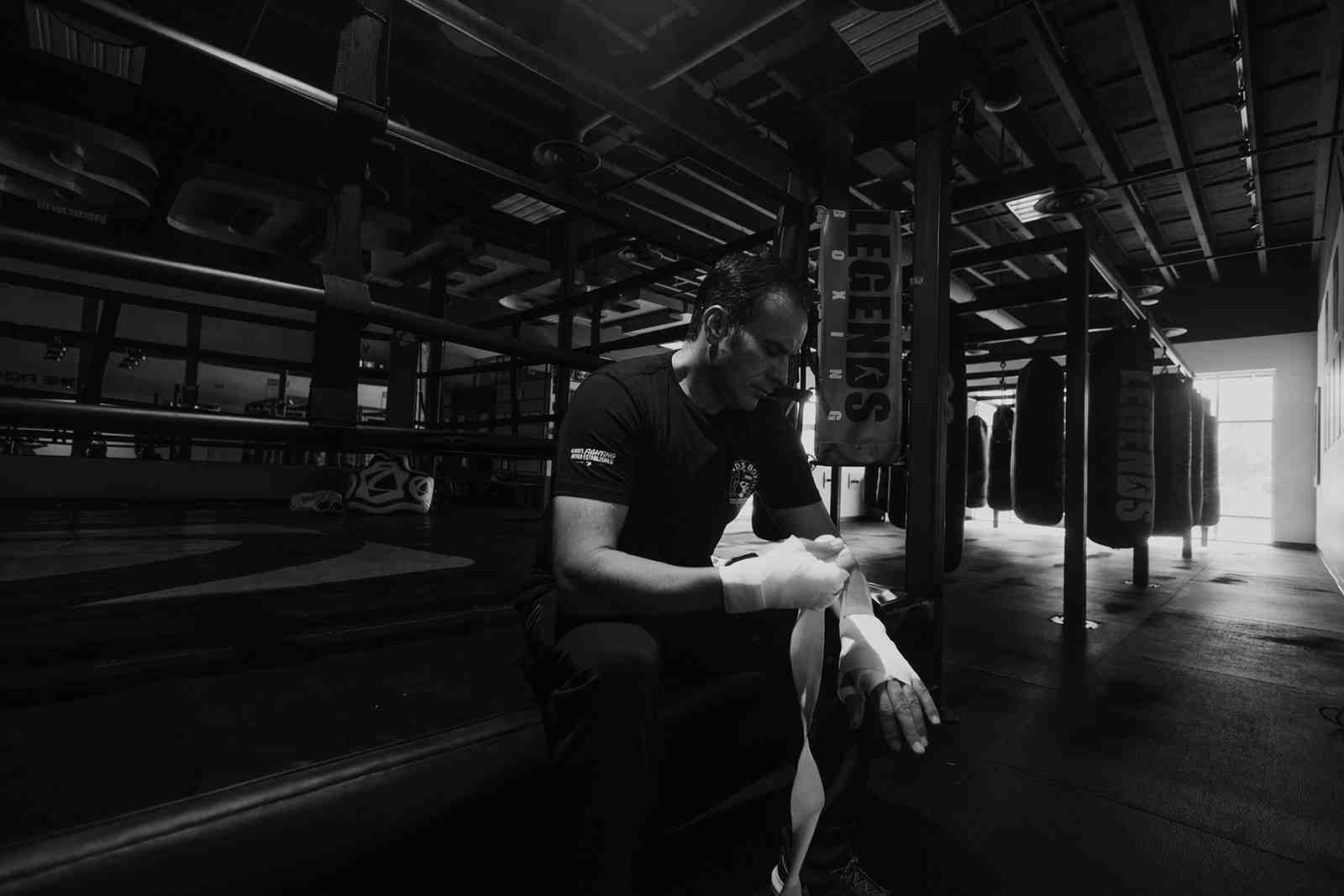
Essential Equipment Checklist
Walking into your first beginners boxing bag workout without the right gear is like heading to the beach without sunscreen — you might have fun at first, but you'll regret it later.
Hand wraps are your first line of defense. These fabric strips protect your knuckles, wrists, and the delicate bones in your hands. Traditional wraps (180 inches) offer customizable support, while quick wraps (the slip-on style) provide convenience for rushed workout days. At Legends Boxing, we see many newcomers trying to skip this step — don't be one of them.
Boxing gloves are your second shield. For bag work, aim for 12–16 oz gloves, which provide the sweet spot of protection and workout intensity. Look for gloves with excellent padding and wrist support.
The bag itself — most beginners should start with one weighing between 50–150 pounds (roughly half your body weight). This gives you enough resistance to feel the satisfaction of a solid punch without jarring your joints.
| Feature | Hanging Bag | Freestanding Bag |
|---|---|---|
| Installation | Requires ceiling mount or stand | Simple setup, no mounting needed |
| Movement | Natural swing | Less movement, stays in place |
| Best for | Technique development | Home use, easy relocation |
Proper footwear — you'll be pivoting and moving around the bag, so cross-training shoes with good lateral support are essential for preventing rolled ankles.
"Always protect your hands with wraps and gloves," Justin Blackwell, TITLE Boxing Club Master Coach often reminds new members. "Your hands are complex structures with many small bones that need proper support during impact."
Safety Precautions & Bag Setup
Bag height: the top of your bag should hit at approximately eye level, allowing you to practice both head and body shots in realistic positions.
Space: make sure you have at least 3–4 feet of clearance around the entire bag. You'll be dancing around it, throwing combinations from different angles.
Starting power: when beginning, resist the urge to channel your inner Mike Tyson. Start with softer punches at about 50–70% of your maximum power. This allows you to develop proper technique without risking injury. Keep those wrists straight when punching — bent wrists can lead to sprains or worse. Your hand wraps help maintain proper alignment, but conscious attention to form is equally important.
Boxing fitness is a marathon, not a sprint. Increase intensity and duration gradually over weeks, not days.
Foundational Skills: Warm-Up, Stance & Punches
Before diving into specific drills, master the fundamentals. A proper beginners boxing bag workout builds from the ground up. Think of these foundational skills as your boxing alphabet — you need to know them before you can write your boxing story.
Perfecting Your Boxing Stance
Your stance is the foundation of everything you'll do on the heavy bag. A proper boxing stance gives you balance, power generation, and protection — three things we emphasize in every class at Legends Boxing.
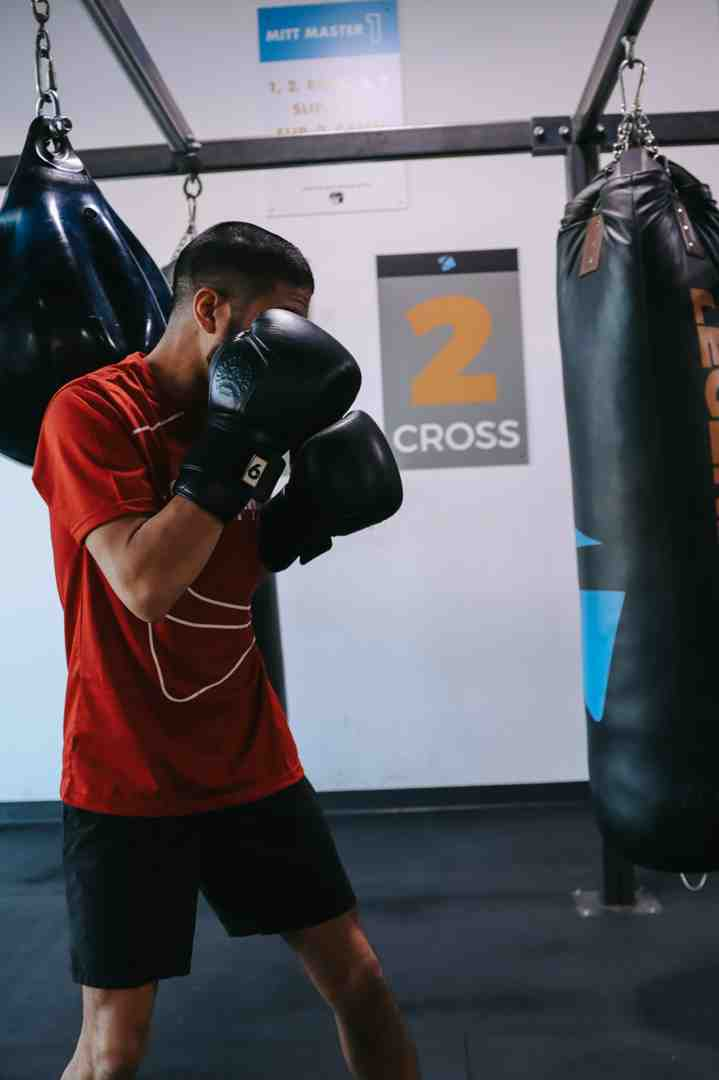
For a basic orthodox stance (left foot forward, right hand as power hand):
- Feet shoulder-width apart, left foot forward, right foot back at about 45 degrees
- Weight evenly distributed, slightly favoring the balls of your feet — like you're ready to move in any direction
- Knees with a gentle bend — no locked knees; this gives you mobility and helps generate power
- Hips facing the bag with a slight angle, allowing rotation when throwing punches
- Both hands protecting your face: lead hand (left for orthodox) extends slightly forward, rear hand stays close to your chin
- Elbows tucked in close to protect your ribs
"Keep your shoulders and your muscles as relaxed as possible," advises coach Hali Englert. "You want to pretend like you're punching in a tunnel."
This relaxed-but-ready position prevents early fatigue and allows for quick movements. At Legends Boxing, we sometimes spend entire sessions just refining stance and movement before adding complex combinations — that's how important the basics are.
The Four Core Punches
Once your stance feels natural, it's time to focus on the four basic punches that make up your boxing vocabulary:
The Jab (1) is your hello punch — a quick, straight shot with your lead hand. It's not about power; it's about speed and creating openings. Keep it snappy and bring your hand right back to guard position.
The Cross (2) is your power punch, thrown straight across with your rear hand. This is where you generate real force by rotating your hips and shoulders, transferring weight from your back foot to your front foot.
The Hook (3 & 4) comes in from the side. Lead hooks (#3) are quicker, while rear hooks (#4) pack more power. Keep your elbow at a 90-degree angle — imagine hooking someone around a corner.
The Uppercut (5 & 6) travels upward, targeting the chin or body. Bend your knees slightly and drive upward, like you're lifting something heavy from the floor.
For all punches: strike with your first two knuckles, keep wrists straight, snap rather than push, exhale sharply with each strike, and always return to guard position.
"Real power comes from skills, not muscle effort," notes Jason Van Veldhuysen from Precision Striking. Focus on technique and timing rather than just hitting as hard as possible.
Smart Warm-Up Sequence
A proper warm-up prepares your body for the demands of bag work and significantly reduces injury risk. Think of it as telling your body, "Hey, we're about to do something intense!"
- Light cardio (3–5 min) — jumping jacks, jogging in place, or jump rope to get your heart pumping and blood flowing
- Dynamic stretching (2–3 min) — arm circles, hip rotations, shoulder rolls, and torso twists to prepare your joints specifically for punching motions
- Shadowboxing (3–5 min) — practice punches and movement without the bag, focusing on form and breathing; start slowly and gradually increase speed
- Specific preparation (1–2 min) — wrist rotations, light bag touches, and stance shifts to bridge the gap between warm-up and actual bag work
"Warm up with light jogging, jumping rope, or shadow boxing for 3–5 minutes," recommends coach Reggie Chambers. "Your body is like a car engine — it works better when it's warmed up."
Zero-to-Hero Heavy Bag Routine
Now that you understand the fundamentals, it's time to put it all together into a structured beginners boxing bag workout. Boxing workouts follow a round-based structure that simulates the pacing of an actual fight — this approach not only builds endurance but also teaches you to manage your energy like a real boxer would.
Sample 20-Minute Circuit
This beginner-friendly circuit introduces you to different aspects of bag work while building endurance and technique:
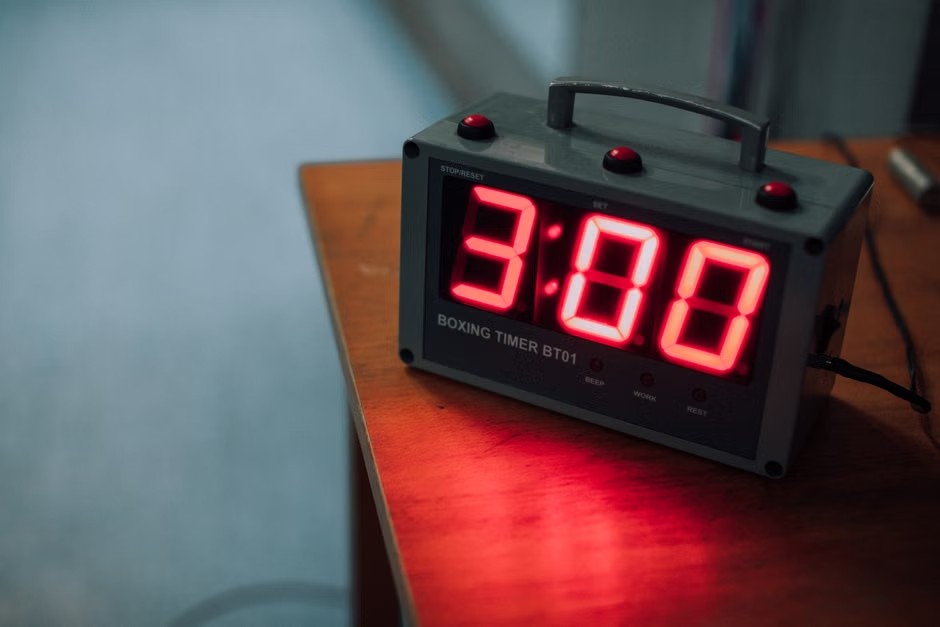
Round 1: Jab Focus (3 minutes)
Start by circling the bag and throwing only jabs. Master this fundamental punch — snap it out and immediately return to guard position. Play with varying your power and speed; sometimes throw light, fast jabs, other times put a bit more behind them. Try mixing in double jabs occasionally. Most importantly, remember to breathe and stay relaxed between punches.
1-Minute Rest: Keep moving lightly, shake out your arms, take a quick sip of water.
Round 2: Basic Combinations (3 minutes)
Add complexity with Jab-Cross (1-2) combinations. Once you feel comfortable, try Jab-Cross-Slip-Cross (1-2-slip-2). The key is smooth transitions between punches — you want them to flow together rather than look choppy. Don't forget to move around the bag between combinations; boxing is as much about footwork as it is about punching.
1-Minute Rest: Light movement, shake out those arms, hydrate.
Round 3: Body Work (3 minutes)
Drop your target area and focus on the body of the bag. Practice hooks and straight punches to where an opponent's midsection would be. The Jab-Cross-Body Hook (1-2-3 to the body) is a classic combination that teaches you to change levels. Try alternating between head and body targets to simulate a real fight scenario. Bend your knees slightly when throwing body shots.
1-Minute Rest: Keep moving, shake it out, hydrate.
Round 4: Power Round (3 minutes)
This is where you put real intention behind your punches. Focus on power shots like your cross and hooks — quality over quantity is the rule here. Throw fewer punches but make each one count. The key to power is proper weight transfer and hip rotation, not arm strength.
1-Minute Rest: Keep moving, shake it out, sip water.
Round 5: Freestyle Finisher (3 minutes)
Bring everything together. Mix head and body shots, vary your speed and power, and focus on continuous movement around the bag. Make this round yours — find your rhythm and finish strong.
As Reggie Chambers points out about combination punching: "This is an incredible oblique workout. If you think 45 seconds is easy, make sure you're really throwing your full force into each cross punch."
For beginners, this 20-minute workout provides a comprehensive introduction to bag work. Don't worry if you're winded by the end — that's completely normal and will improve with consistent practice.
Beginners Boxing Bag Workout Schedule
Weekly frequency and session length:
- Weeks 1–2: 2 sessions × 15 minutes
- Weeks 3–4: 2 sessions × 20 minutes
- Weeks 5–6: 3 sessions × 20 minutes
- Weeks 7–8: 3 sessions × 25 minutes
Start with at least 48 hours between workouts. Your muscles need this recovery time to grow stronger. When it comes to intensity, less is more at first — begin at about 50–75% of your maximum power to develop proper technique, then dial up gradually over weeks, not days.
At Legends Boxing, we've seen this gradual approach work wonders for beginners. Many of our members start with just two classes per week before adding a third as their skills and conditioning improve. This measured progression builds confidence while minimizing soreness and reducing injury risk.
"Too much or too little depends on how you feel!" notes Jason Van Veldhuysen. Listen to your body and adjust accordingly — quality always trumps quantity in boxing training.
Keep Climbing: Progress, Recovery & FAQs
Once you've gotten comfortable with your beginners boxing bag workout, you'll naturally want to take things up a notch. Here's how to keep challenging yourself while staying injury-free.
Common Beginners Boxing Bag Workout Mistakes
Dropping your guard — it's tempting to let that non-punching hand drift down, especially when you're focusing on power. But keeping both hands up protects your face and builds proper muscle memory from day one.
Standing flat-footed will limit your progress quickly. Boxing is a dance around the bag — you should be constantly moving, circling, stepping in and out. When your feet get planted, your punches lose power and you miss out on the cardio benefits.
Arm punching — throwing wild, flailing punches that rely only on arm strength. Your power should flow from the ground up: legs, hips, and core all contribute to every punch. When a punch feels effortless yet powerful, you know you're doing it right.
100% power on every punch — this leads to sloppy technique and is a recipe for injury. Mix up your power levels and focus on speed and accuracy for many of your combinations.
Bent wrists on impact — keep those wrists straight and properly wrapped to avoid sprains that could sideline you for weeks.
Skipping rest days — boxing is demanding on your joints and tendons. Your body gets stronger during recovery, not during the workout itself.
Recovery & Cool-Down Blueprint
At our Legends Boxing locations, we put almost as much emphasis on proper recovery as we do on the workout itself:
- Active cool-down (2–3 min) — light shadowboxing to gradually bring your heart rate down; prevents blood pooling and reduces post-workout dizziness
- Static stretching (5–7 min) — focus on shoulders, chest, back, and legs; hold each stretch for a full 30 seconds
- Hydration and protein within 30 minutes — your muscles are particularly receptive to nutrients during this window
- Active recovery days — on non-boxing days, consider a gentle walk or yoga to promote blood flow without adding stress to recovering tissues
- Hand care — ice your knuckles if they're sore, and use a moisturizing cream to prevent skin from cracking
Frequently Asked Questions
How long should each session last?
For beginners, aim for 15–30 minutes of actual bag work (not including warm-up and cool-down). This typically means 3–5 rounds of 3 minutes each, with 1-minute rest periods. Quality always beats quantity, especially when you're starting out. As your conditioning improves, you can gradually work up to 30–45 minute sessions.
How hard should beginners punch?
Start at about 50–75% of your maximum power. This sweet spot lets you focus on technique and timing without risking injury or developing bad habits. Think about "crisp" punches rather than "hard" punches — the power will develop naturally as your technique improves. Even professional boxers don't throw every punch at maximum power; they pick their moments.
Can I mix kicks into my routine?
Absolutely! Many of our members enjoy adding kicks for a more complete martial arts experience. Start with basic front kicks and side kicks kept below waist height, focusing on balance and proper form before worrying about power. A simple effective combination: Two Lead Kicks – Left Cross – Rear Kick. Make sure you're wearing proper supportive footwear and have enough space around your bag to extend your legs fully.
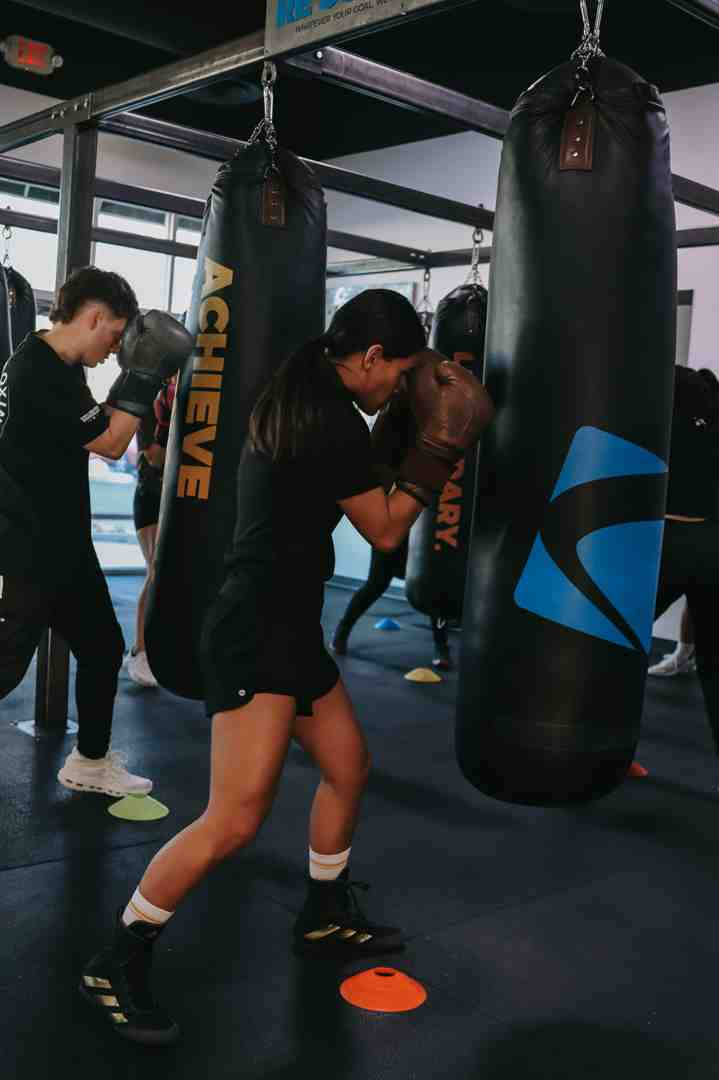
As you continue your boxing journey, consistency trumps intensity. Three moderate sessions per week will yield better results than one all-out session that leaves you too sore to train again for days. Listen to your body, celebrate small improvements, and enjoy the process.
Your Journey Starts at Round One
The journey from complete beginner to confident boxer doesn't happen overnight, but with the beginners boxing bag workout routines outlined in this guide, you'll make steady progress. There's something uniquely satisfying about the heavy bag — that perfect combination of cardio, strength building, and skill development all wrapped into one sweaty, empowering package.
Remember to focus on technique before power. I've seen too many beginners try to channel their inner Mike Tyson on day one, only to walk away with sore wrists and diminished enthusiasm. Boxing is a journey — accept the process of improvement rather than rushing toward an imaginary finish line.
Consistency is your best friend. Those 2–3 sessions per week might not seem like much, but they create the foundation for lasting progress. Our most successful members at Legends Boxing aren't necessarily the ones who train the most hours — they're the ones who show up regularly, week after week, gradually building their skills and conditioning.
Always protect those hands. Your hands contain 27 small bones each — they deserve to be wrapped and gloved properly every single session.
At Legends Boxing, we've witnessed changes that go beyond physical fitness. There's something about mastering the sweet science that builds confidence in all areas of life. As Muhammad Ali said, "I don't count my sit-ups; I only start counting when it starts hurting because they're the only ones that count."
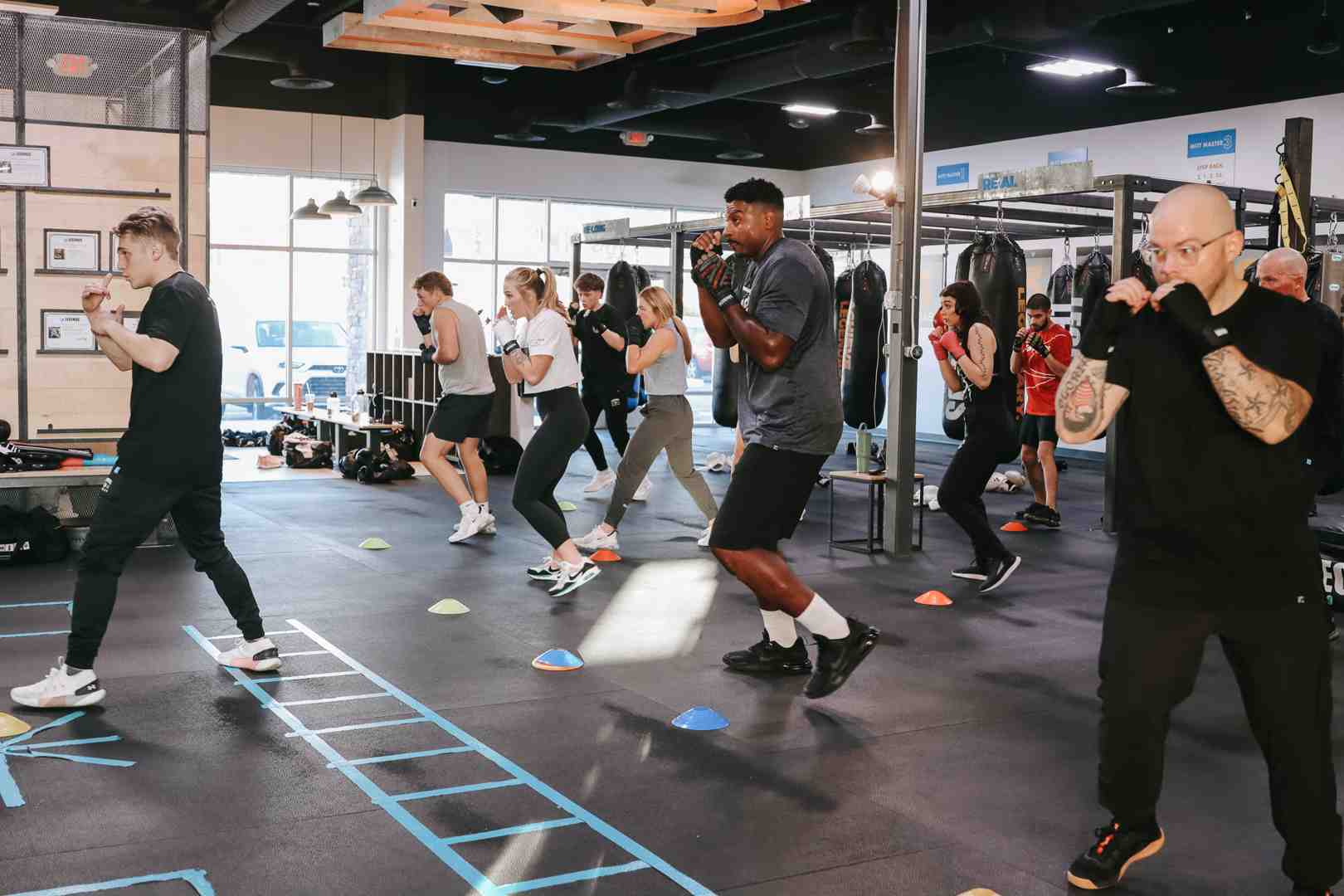
Ready to take your training to the next level? Find a Legends Boxing location near you across Utah, Florida, and Texas — our inclusive community welcomes all fitness levels, with absolutely no boxing experience required. Or book your first free class today and experience the difference that professional coaching and a supportive group environment can make in your boxing journey.
Every champion started as a beginner. Your first round is waiting.