
From Zero to Jab: Easy Boxing Moves for Newbies
Beginner boxing moves are your gateway to one of the most challenging and rewarding full-body workouts available. This guide covers the proper stance, all six fundamental punches, basic defense, simple combinations, essential gear, and home practice tips — everything you need to go from zero to throwing your first combination.
Why Beginner Boxing Moves Are Your Gateway to a Total Change
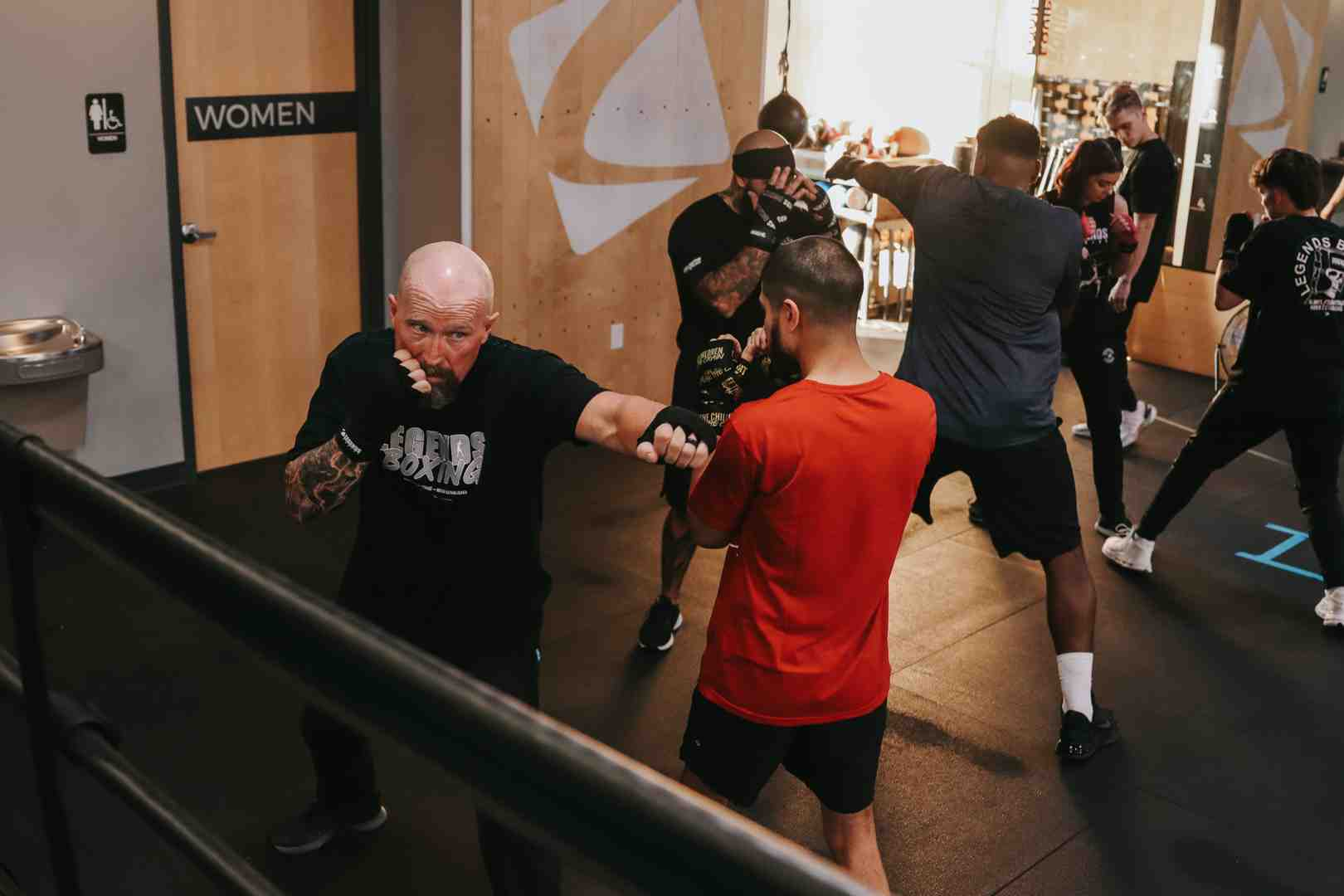
Beginner boxing moves are your gateway to one of the most challenging and rewarding full-body workouts available. Boxing demands speed, agility, power, and endurance — but the good news is you don't need any experience to start. The fundamental moves are accessible to everyone, regardless of fitness level.
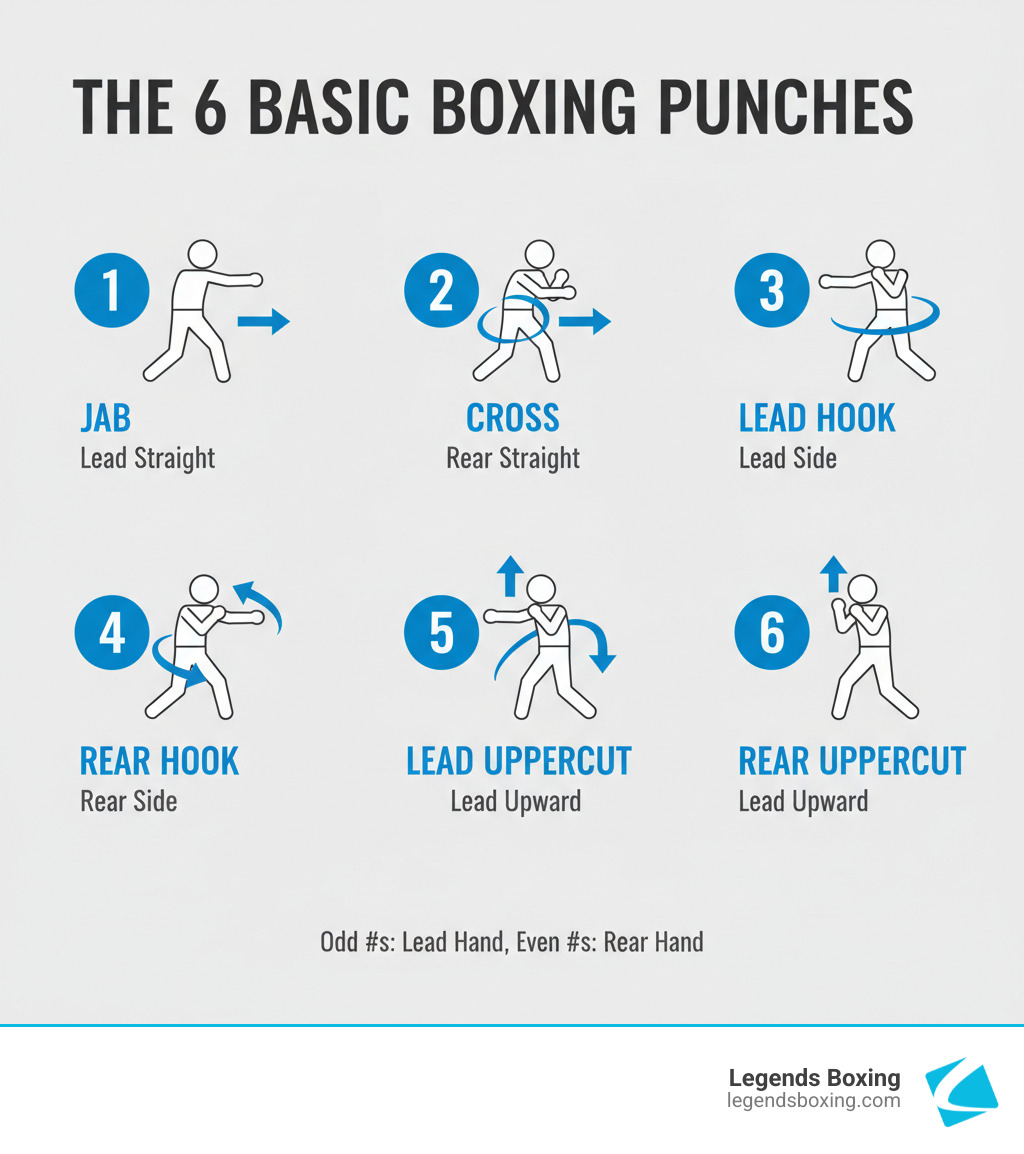
The Six Basic Boxing Punches:
| # | Punch | Hand | Type |
|---|---|---|---|
| 1 | Jab | Lead | Quick straight punch |
| 2 | Cross | Rear | Powerful straight punch |
| 3 | Lead Hook | Lead | Side punch |
| 4 | Rear Hook | Rear | Side punch |
| 5 | Lead Uppercut | Lead | Upward punch |
| 6 | Rear Uppercut | Rear | Upward punch |
Odd numbers (1, 3, 5) are lead hand punches; even numbers (2, 4, 6) are rear hand punches.
In this guide, you'll learn the proper stance, master all six fundamental punches, understand basic defense, and practice simple combinations. We'll also cover essential gear, home practice tips, and the incredible benefits of boxing — from stress relief to real self-defense skills.
I'm Robby Welch, National Head Coach for Legends Boxing. I've helped hundreds of beginners learn these moves and transform their fitness. Let me show you how to go from zero to throwing your first combination.
The Foundation: Stance, Footwork, and Breathing
Before throwing a punch, you must master the foundation: your stance, footwork, and breathing. These are the invisible beginner boxing moves that separate a flailer from a boxer. Master these, and the punches will follow.
Adopting the Proper Boxing Stance
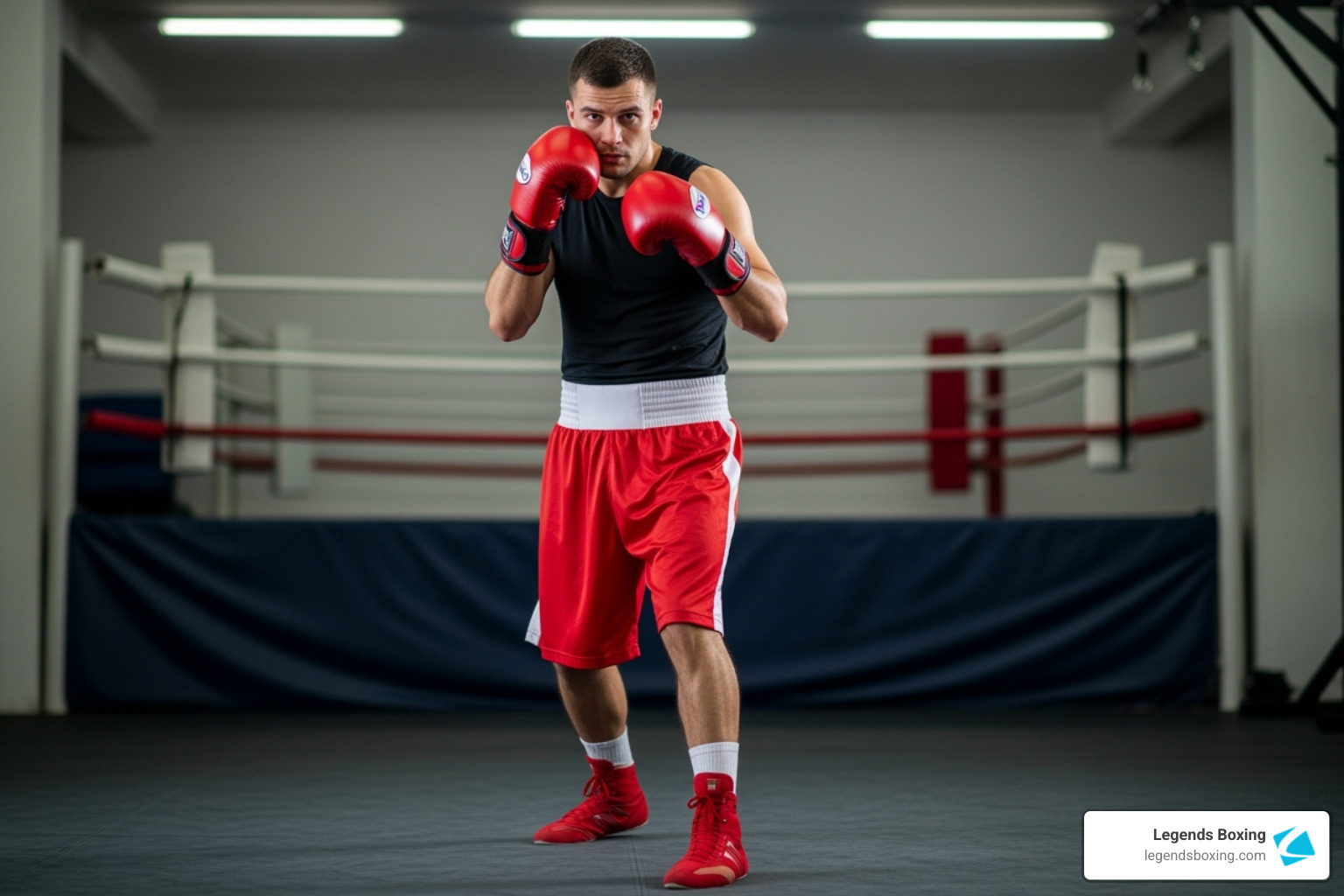
Your stance is your home base — designed for balance, protection, and power. Your stance depends on your dominant hand. Right-handed fighters use the Orthodox stance (left foot forward), while left-handed fighters use the Southpaw stance (right foot forward). Your power hand stays back to generate force.
To set up an Orthodox stance (Southpaws, mirror this):
- Start with feet shoulder-width apart, then step your right foot back. Your left toe and right heel should roughly align.
- Keep your knees slightly bent and your weight evenly on the balls of your feet.
- Tuck your chin down to your lead shoulder. This is non-negotiable for protection.
- Bring your hands up. Your lead (left) hand hovers at chin level, and your rear (right) hand rests on your cheekbone. Keep elbows tucked in.
This stance might feel awkward initially, but it's crucial for power and defense.
Fundamental Boxing Footwork Techniques
Good footwork provides balance, power, and angles. The golden rule: never cross your feet and always maintain your stance.
The step-drag technique is key. To move forward, step with your lead foot, then drag your rear foot. To move back, step with your rear foot, then drag your lead. The foot closest to your direction of travel always moves first. This keeps you grounded and ready.
The pivot is another essential move. By pivoting on the ball of your lead foot, you can rotate your body to evade attacks and create new offensive angles. It's a simple beginner boxing move that makes a huge difference. The constant light bounce you see boxers do keeps them agile and ready to react.
How Proper Breathing Fuels Your Punches
In boxing, breathing is a weapon. When you throw any punch, exhale sharply through your mouth with a "tsss" or "shh" sound as the punch lands.
This sharp exhale does three things:
- Engages your core: It tightens your abs, connecting your lower body's power to your fist.
- Protects your body: A tensed core acts as a natural shield against body shots.
- Boosts endurance: Rhythmic breathing prevents you from holding your breath and gassing out.
You'll immediately feel the increase in power once you start breathing with your punches.
The Offensive Toolkit: Mastering the 6 Basic Punches
Now for the fun part — throwing punches. Boxing uses a standardized numbering system that makes learning beginner boxing moves simple. In any boxing gym, you'll hear trainers call out numbers: odd numbers (1, 3, 5) are for your lead hand, and even numbers (2, 4, 6) are for your rear (power) hand. This applies to both orthodox and southpaw stances.
Straight Punches: The Jab (1) and The Cross (2)
Your straight punches are the foundation of your offense.
The Jab (1)
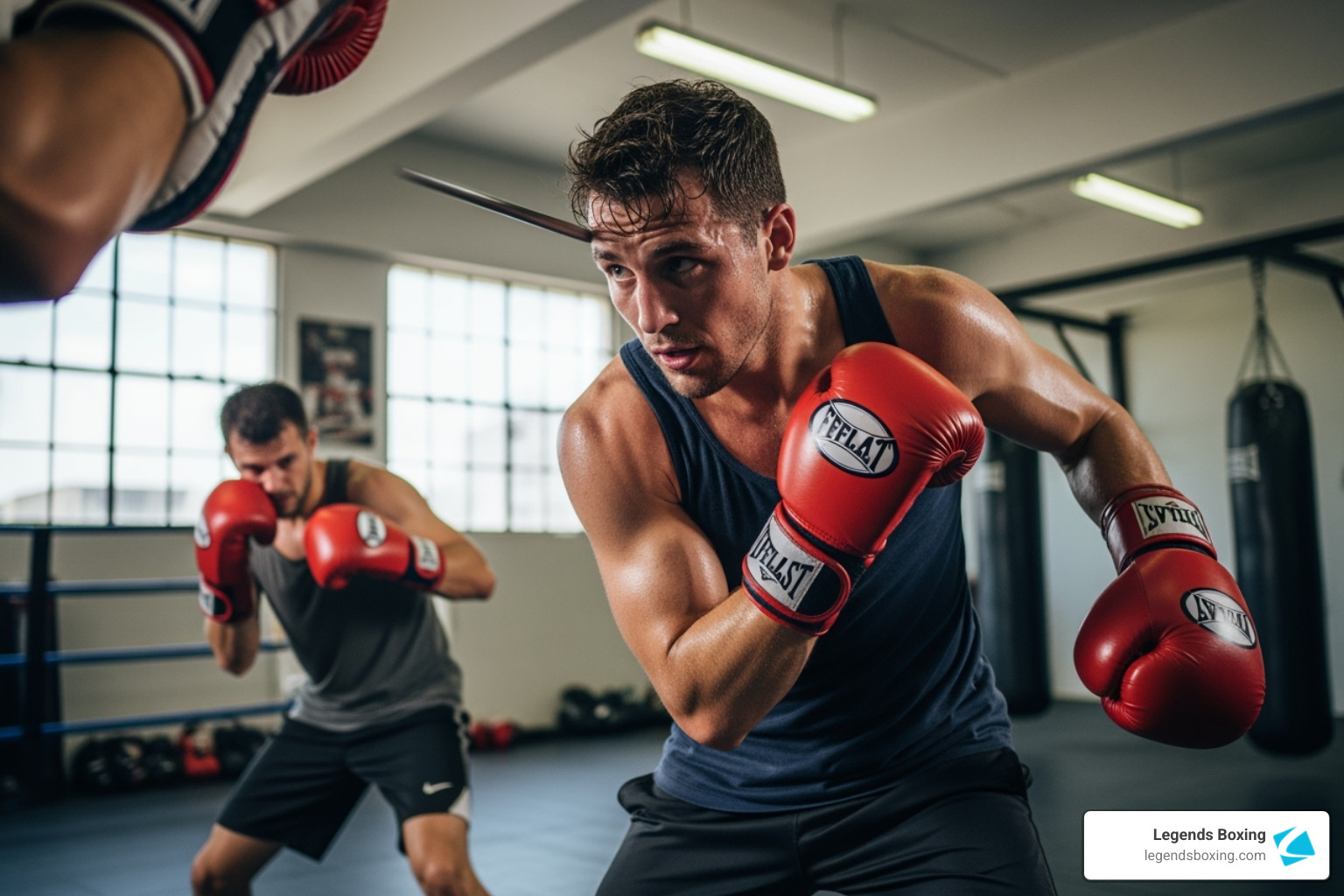
The jab is the most important punch in boxing. It's your longest, fastest punch, and it sets up everything else. Use it to measure distance, test defenses, and control the fight's rhythm. To throw a jab, extend your lead arm straight out, rotating your fist so the palm faces down at impact. Snap it back to your chin just as quickly. A slow jab is an invitation to be countered.
The Cross (2)
The cross is your power punch, thrown with your rear hand. The power comes from body rotation. As you throw the punch, pivot your rear foot and rotate your hips and torso — your arm is just the delivery system. Extend your rear arm straight, rotating the fist palm-down at impact. Keep your lead hand glued to your face for protection, and snap the punch back immediately.
Side Punches: The Lead Hook (3) and Rear Hook (4)
Hooks are power shots that come from a side angle, making them hard to see coming.
The Lead Hook (3)
The lead hook is a devastating punch — and the power starts with your feet. Pivot your lead foot and rotate your hips and torso into the punch. Your arm should form a 90-degree angle, with your elbow parallel to the floor. Swing your fist horizontally, keeping your rear hand tight to your face for protection.
The Rear Hook (4)
The rear hook mirrors the lead hook but comes from your more powerful rear side. The mechanics are the same: pivot your rear foot, rotate your hip and torso, and swing your fist horizontally with your arm at a 90-degree angle. Keep your lead hand up as a guard.
Upward Punches: The Lead Uppercut (5) and Rear Uppercut (6)
Uppercuts travel upward, making them perfect for catching an opponent who is leaning forward.
The Lead Uppercut (5)
The lead uppercut is a sneaky, close-range power punch. Drop your lead shoulder slightly and bend your knees to load up. Drive upward with your legs as you rotate your hips and torso, sending your fist in a vertical arc toward the chin. Keep your rear hand up.
The Rear Uppercut (6)
This is your most powerful upward strike. The mechanics are the same as the lead uppercut but with your rear hand. Load up by bending your knees, then drive upward with an explosive rotation of your hips and torso. This punch is devastating at close range.
Master these six beginner boxing moves to build a complete offensive toolkit.
Defense and Combinations: Putting Your Beginner Boxing Moves into Action
Throwing punches is only half the battle. Defense is what makes you a boxer — and it creates opportunities to counter-attack.
Basic Defensive Maneuvers
Good defensive beginner boxing moves keep you safe and set up your offense.
- Slips: To evade straight punches (jabs, crosses), move your head off the centerline by rotating your torso and dropping a shoulder. The punch sails past, leaving you in position to counter.
- Ducks and Rolls: To avoid hooks, duck by bending your knees in a quick squat-like motion. A roll adds a circular movement, shifting your weight to "roll" under the punch and come up ready to fire back.
- Blocking and Parrying: Blocking uses your gloves and forearms to absorb a punch. Parrying is more active — you use a quick push to deflect an incoming punch off-target.
Why Mastering the Basics Is Non-Negotiable
Skipping fundamentals is like building a house on sand. Repetition builds muscle memory, allowing you to react automatically without thinking. Proper technique develops quickness while maintaining your guard and prevents injuries. Every advanced technique is built on these basics — mastering them is the only way to improve your timing, accuracy, and power. Focus on form and be consistent.
Simple and Effective Beginner Boxing Combinations
Once you're comfortable with individual punches, string them into combinations:
| Combination | Sequence | Why It Works |
|---|---|---|
| Jab-Cross | 1-2 | The most fundamental combo — fast jab sets up the power cross |
| Jab-Cross-Hook | 1-2-3 | Attacks from multiple angles, hard to defend |
| Jab-Cross-Jab | 1-2-1 | Second jab catches opponents off-guard as they recover |
| Jab-Jab-Cross | 1-1-2 | Double jab creates hesitation before the power shot |
| Cross-Lead Hook-Cross | 2-3-2 | Rear power, then side angle, then rear power again |
| Lead Uppercut-Cross | 5-2 | Uppercut lifts the guard, cross comes over the top |
Practice these slowly, focusing on smooth transitions and proper form. Speed will come with repetition.
Training Essentials: Gear, Home Practice, and Benefits
You don't need a garage full of equipment to start. You can practice beginner boxing moves with just a few essentials, many of which can be used at home.
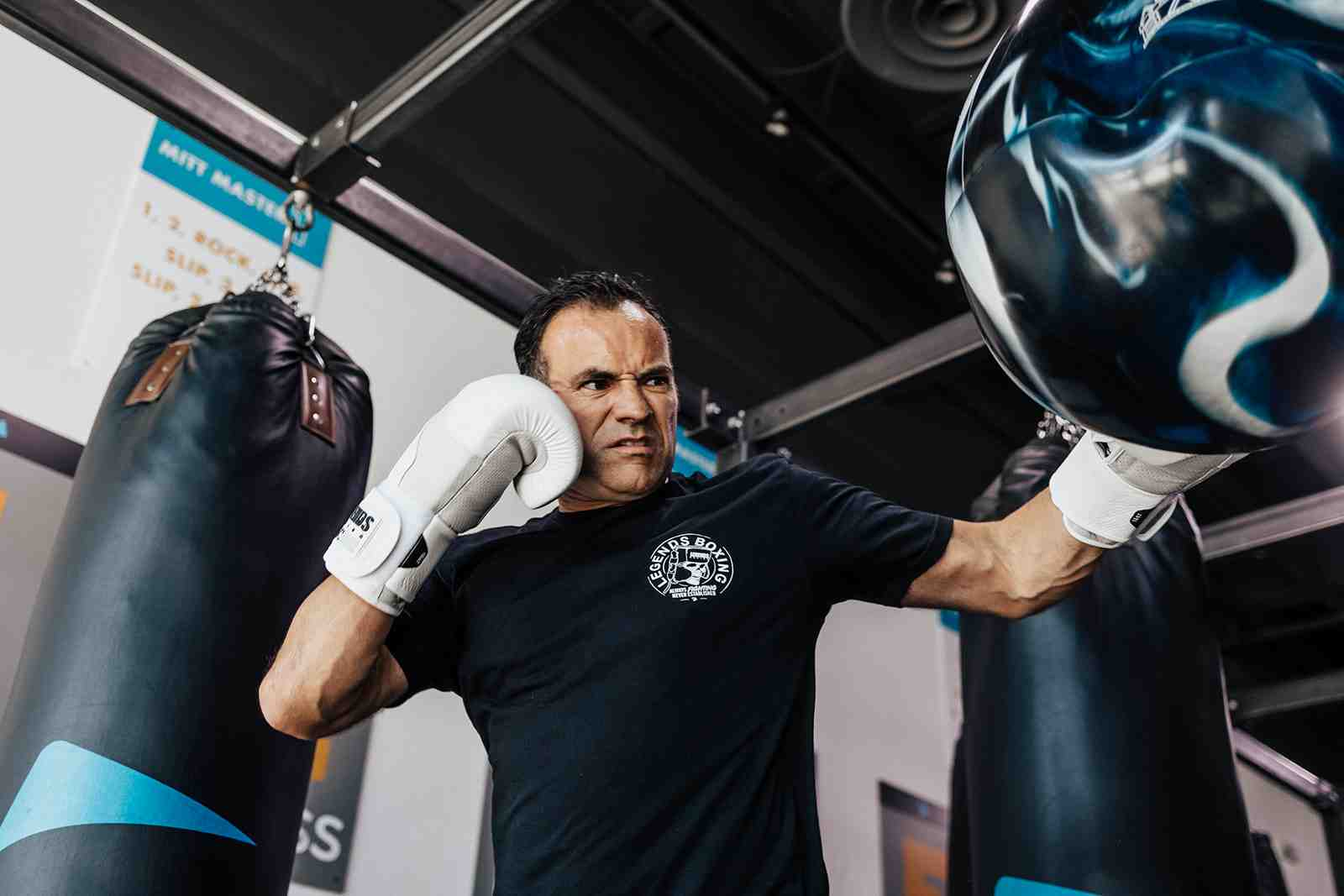
Essential Equipment for a Beginner Boxer
This gear will keep you safe and help you train effectively:
- Hand wraps: Non-negotiable. They protect the small bones in your hands and support your wrists. Always wrap your hands before putting on gloves.
- Boxing gloves: These protect your hands and your training partners. For beginners, 12–16 oz gloves are recommended, depending on your body weight.
- Mouthguard: Protects your teeth, lips, and jaw. Even when hitting a bag, accidents can happen — prevention is key.
- Jump rope: An old-school tool that is still one of the best for improving footwork, coordination, agility, and endurance.
How to Practice Your Beginner Boxing Moves at Home
You can build a strong foundation right in your living room:
- Shadowboxing: Sparring with an imaginary opponent, ideally in front of a mirror to check your form. Practice your stance, footwork, punches, and defensive moves. Focus on fluid technique, not speed.
- Heavy bag: If you have one, it's fantastic for developing power and endurance. Always wear wraps and gloves, and prioritize proper form over hitting hard to prevent injury.
- Jump rope: Just 10–15 minutes of jumping rope provides an excellent cardio workout and builds explosive calf strength, rhythm, and coordination that translate directly to the ring.
Benefits of Mastering Beginner Boxing Moves
Boxing is a transformative journey with benefits that extend far beyond the gym:
- Overall Fitness: Boxing is a true full-body workout that builds cardiovascular health, functional strength, and explosive power. It engages your core, legs, and upper body simultaneously.
- Self-Defense: Learning to defend yourself boosts confidence and situational awareness. You'll gain effective striking and defensive skills that are practical in real-world scenarios.
- Mental Toughness: The discipline required to master beginner boxing moves builds focus and resilience. Hitting a bag is also an incredible outlet for stress relief — a healthy way to channel negative emotions and build mental fortitude.
Frequently Asked Questions about Beginner Boxing Moves
What is the single most important punch for a beginner to learn?
Hands down, it's The Jab (1). It's the foundation of everything. As your longest and fastest punch, it allows you to control distance, set up power shots, and defend yourself with minimal energy. Every great boxer has a great jab. Master it first.
Can I teach myself boxing using online resources?
Yes, online resources like this guide are great for learning the basics of stance, footwork, and punches. However, there is no substitute for a real coach. A trainer provides personalized feedback, corrects subtle mistakes you can't see, and helps you avoid bad habits that can lead to injury or limit your progress. If you're serious about learning beginner boxing moves correctly, a coach is invaluable.
How long does it take to get good at the basic moves?
Everyone learns at a different pace, but consistency is key. With regular practice (2–3 times per week), most beginners feel comfortable and proficient with the basics within a few months. Your movements will feel more natural and your punches will have more "snap." But remember, boxing is a lifelong journey — even pros drill the fundamentals daily. Be patient with the process and trust that every session makes you better.
Step Into the Gym — No Experience Needed
You now have the blueprint for beginner boxing moves — from the proper stance and footwork to the six basic punches and essential defensive maneuvers. Mastering these fundamentals is your path to success. It's not about being perfect on day one; it's about building a solid foundation through consistent practice. The process of learning and improving is where the real physical and mental change happens.
At Legends Boxing, we've built our program around making this journey fun and accessible. Our classes combine real boxing techniques with conditioning for a full-body workout that delivers results — and no prior experience is needed to get started.
You've read about the moves; now it's time to experience them. There's nothing like the feeling of landing your first clean combination. Book a free workout at Legends Boxing and let one of our experienced coaches guide you through these beginner boxing moves in person. Find a location near you across Utah, Texas, and Florida — and discover why so many people are trading their traditional gym memberships for the excitement, community, and results of boxing fitness.